Written by: Halima Bapu
A marble bathroom has long been a symbol of luxury, but floor-to-ceiling marble can sometimes feel intimidating. For many homeowners, the question isn’t whether marble is beautiful, it’s whether using it extensively will feel too grand, too cool, or overly formal. Generally, when considering marble in bathroom design, it’s important to weigh factors like cost, maintenance, and the practical differences between natural marble and marble-look alternatives.
In reality, when approached with care, a marble bathroom can feel soft, elegant, and deeply atmospheric rather than showy. The beauty of marble tiles lies in their ability to wrap a bathroom in a continuous surface, creating calm rather than visual noise. Real marble is generally expensive and requires more maintenance compared to alternatives like porcelain.
This guide explores bathroom design ideas for creating floor-to-ceiling marble spaces that feel refined, warm, and timeless, whether you’re designing a modern ensuite or a more classic family bathroom.
The concept of a marble bathroom often brings to mind polished hotel interiors, glossy walls, dramatic contrast, and high shine. But residential bathroom design benefits from a softer interpretation.
When marble floor tiles, wall tiles, and shower surfaces are installed cohesively, the room becomes immersive rather than decorative. Instead of acting as a feature, marble becomes the architecture of the space itself.
This approach works particularly well in bathrooms with good natural light, where stone surfaces can reflect and diffuse light gently across the room. The result is a sense of quiet grandeur, elegant but never overwhelming.
A designer can help achieve the perfect balance between luxury and comfort in a marble bathroom, ensuring the space feels both sophisticated and inviting.

Finish is one of the most influential, yet underestimated, design decisions in a marble bathroom.
Polished marble has a reflective surface that enhances shine and amplifies light. It can feel striking and luxurious, especially when paired with brass or gold fittings, but too much polish can tip a space toward formality.
Honed marble, by contrast, offers a softer, more refined finish. It absorbs rather than reflects light, creating a calm, velvety impression that feels particularly suited to bathrooms designed for relaxation. For safety, honed (matte) finishes are recommended on marble floors to improve slip resistance.
Textured or brushed stone surfaces introduce depth and improve grip underfoot, ideal for marble floor tiles in wet zones such as a walk-in shower. Incorporating round edges on marble surfaces or using penny round mosaic tiles can further enhance both the aesthetic softness and functional safety of a marble bathroom.
The choice of finish ultimately shapes whether the room feels sleek and modern or warm and timeless.
Tile scale plays a crucial role in how floor-to-ceiling marble is experienced.
Large marble tiles reduce grout lines and visual breaks, allowing veining and natural pattern to flow uninterrupted across walls and floors. This continuity enhances the sense of space, making even smaller bathrooms feel expansive. Tiles with thick veining can create a bold visual impact and significantly influence the overall ambiance of the marble bathroom.
Smaller tile formats, mosaics, geometric shapes, or decorative inserts, can still be incorporated, but work best as detail moments. For example, a mosaic shower floor or vanity backdrop adds texture and provides a visual break in the marble surface, adding interest and contrast without interrupting the overall calmness.
In essence, large tiles create serenity; smaller tiles create emphasis.

While natural stone carries undeniable allure, marble-look ceramic tiles and porcelain tiles offer a more affordable and practical solution, particularly in family bathrooms or high-traffic spaces. Competitors generally compare real marble and marble-look alternatives, noting that marble-look materials are more practical and cost-effective for many homeowners.
Advances in manufacturing mean ceramic tiles can now replicate the shades, veining, and texture of real marble with impressive accuracy. They’re also more durable, less porous, and easier to maintain. Marble-look alternatives are usually much easier to care for and less expensive than real marble. High-quality marble-look alternatives can provide a similar aesthetic to real marble without the associated costs.
For homeowners balancing budget with beauty, combining real marble in focal areas with marble-look tiles elsewhere can create the perfect blend of luxury and practicality. Real marble is unique, with natural markings not replicated in marble-look alternatives, and it generally has a higher resale value.
Both real marble and marble-look materials can be chosen to suit the specific needs and style of your bathroom.
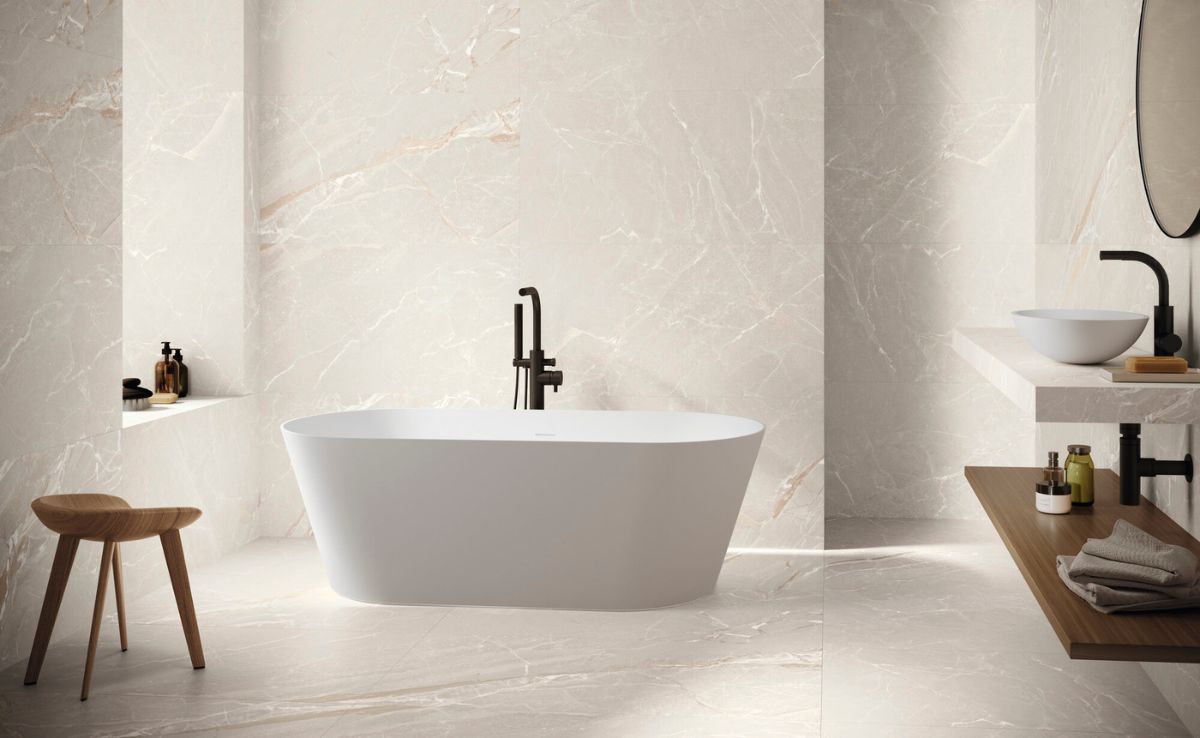
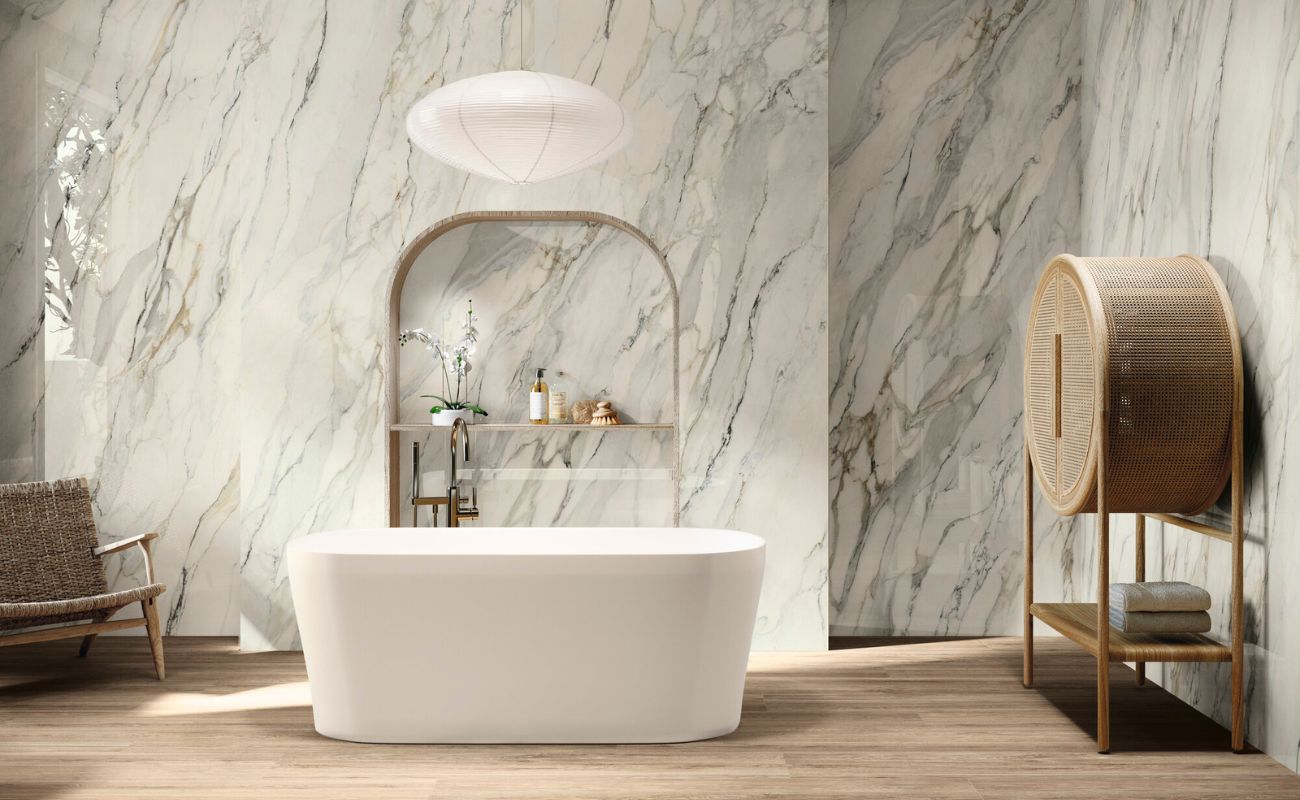
White marble is often considered the most classic and elegant choice for floor-to-ceiling bathrooms, with Carrara marble being a well-known variety. Its ability to reflect natural light keeps the room feeling fresh, open, and expansive.
Pair white marble with brushed brass taps, warm wood furniture, or soft gold accents to introduce warmth and prevent the space from feeling too cool. This combination feels elegant, timeless, and quietly luxurious.
Carrara marble is one of the most recognisable natural stones, loved for its feathery grey veining and softer contrast.
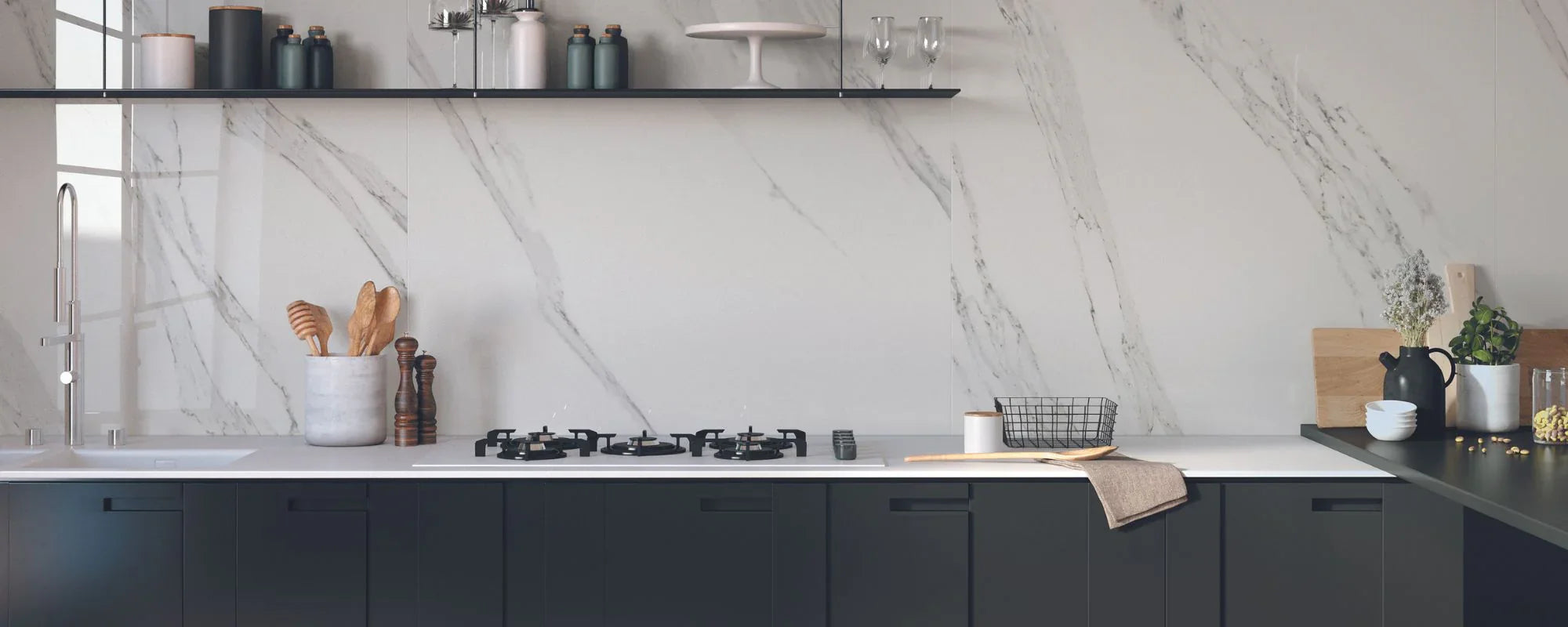
Carrara works beautifully across floors, shower walls, and vanity splashbacks, offering movement without heaviness. Adding a bit of mosaic detail, such as penny round or herringbone patterns, can enhance the space and give your marble bathroom a bit more personality while maintaining cohesion. Marble mosaics, such as penny round or herringbone patterns, are trending for their aesthetic appeal and versatility.
Because carrara marble is porous, sealing is essential to preserve its beauty over time.
Black and dark-toned marble tiles introduce contrast and mood, creating a moody, sophisticated atmosphere in the bathroom.
When balanced with lighter stone, reflective mirrors, or warm metallic elements, black marble feels dramatic without overwhelming the room. Pairing black stone floors with lighter walls, for example, creates visual grounding while maintaining openness.
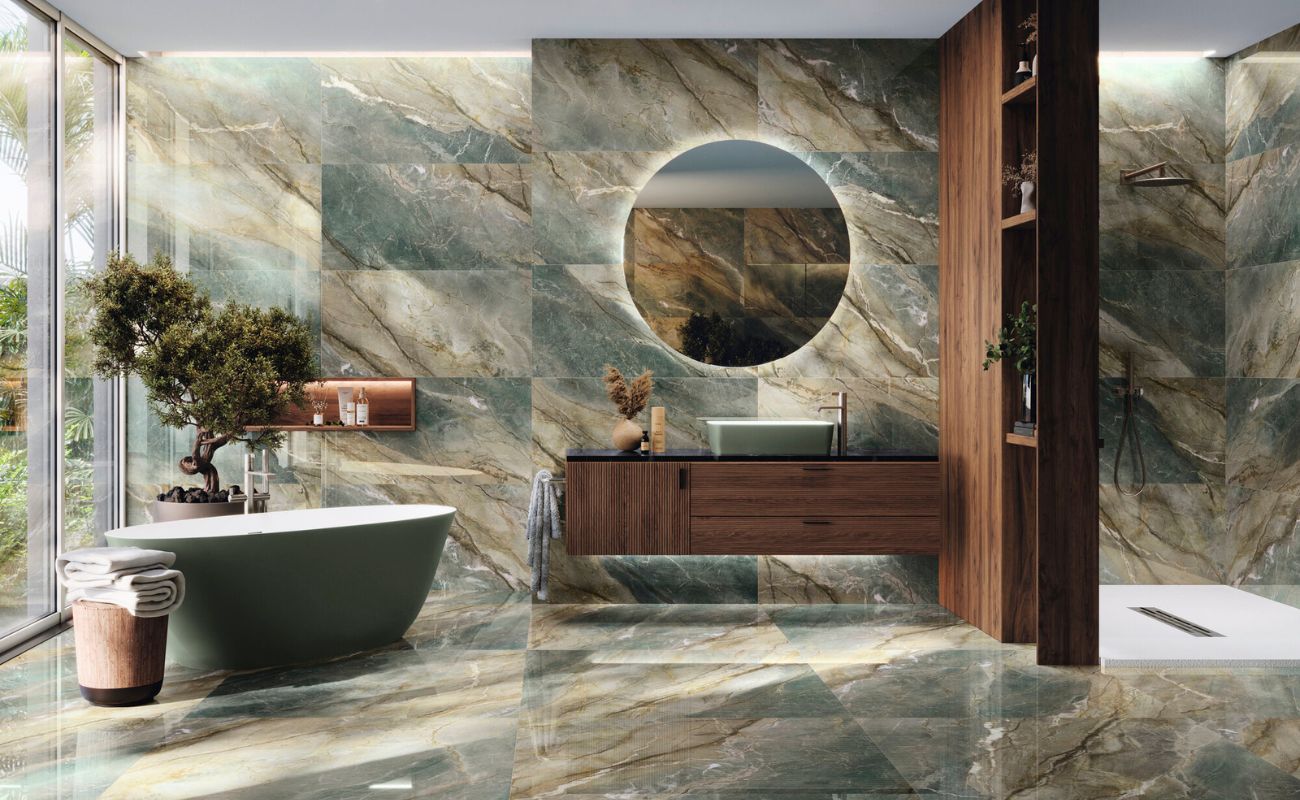
Green marble has grown in popularity thanks to its connection to nature. Its layered colours, from deep forest to pale sage, introduce a calming, biophilic quality.
Paired with plants, wood accents, and soft lighting, green marble bathrooms feel restorative and spa-like, blending luxury with natural inspiration.

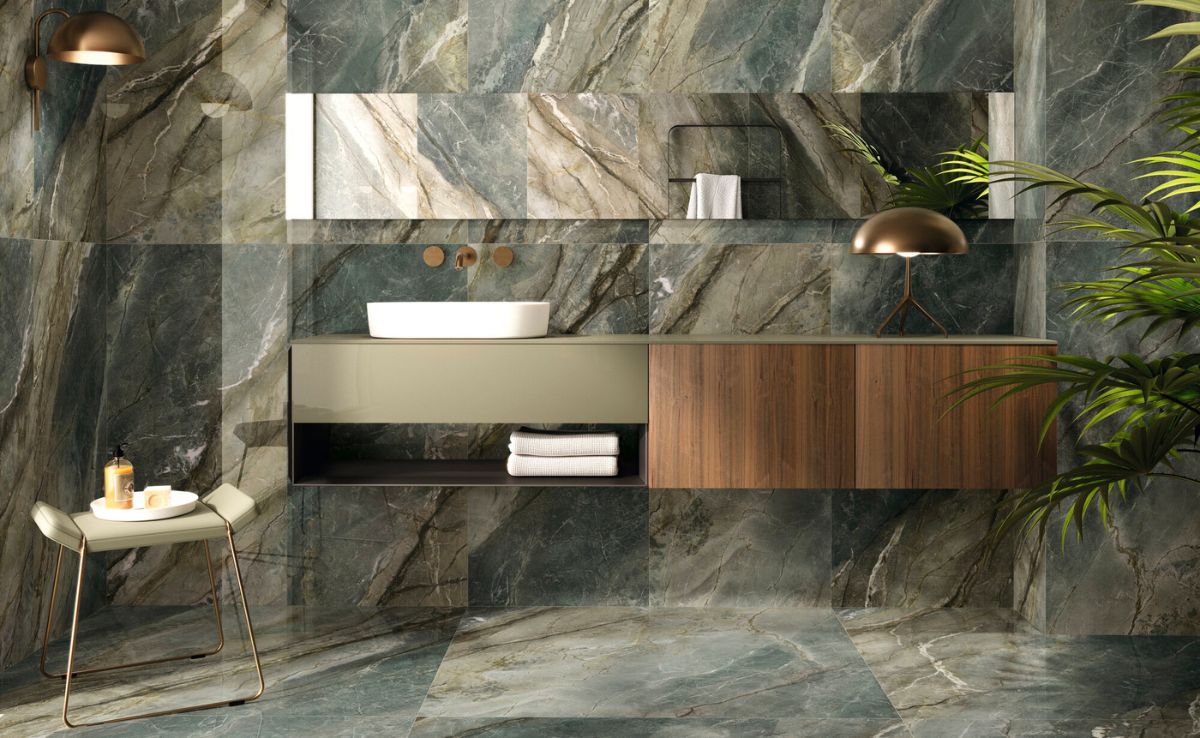
While floor-to-ceiling marble creates cohesion, layering is key to preventing flatness.
Designers often introduce variation through:
These elements add depth and texture while maintaining a refined overall impression.
Marble can be used extensively or selectively depending on lifestyle and budget.
It works particularly well on:
When carried across floor, walls, and even ceiling in some designs, marble creates a seamless envelope that feels immersive and luxurious.
Natural marble requires thoughtful care, but with the right maintenance it remains both beautiful and durable.
Regular sealing protects against stains, while gentle, pH-neutral cleaners preserve the stone’s surface. Immediate attention to spills, particularly in shower or bath zones, helps maintain long-term performance.
Marble-look ceramic tiles, meanwhile, offer a lower-maintenance alternative for households prioritising ease of upkeep.
A floor-to-ceiling marble bathroom doesn’t have to feel imposing. When balanced with warm materials, softer finishes, and thoughtful lighting, marble becomes calming rather than commanding.
The result is a bathroom that feels elegant, stylish, and timeless, a space where natural stone, light, and design come together to create quiet luxury that endures well beyond trends.
To keep marble looking its best, regular sealing is essential to protect against stains. Use gentle, pH-neutral cleaners and avoid acidic substances that can etch the surface. Dry marble surfaces after cleaning to prevent water spots, and reseal the marble every 6 to 12 months depending on use.
Yes, marble-look ceramic and porcelain tiles offer a practical and affordable alternative. They replicate the appearance of real marble with less maintenance, greater durability, and better resistance to water, making them ideal for high-traffic or family bathrooms.
White marble, especially Carrara marble, is a classic choice for its light-reflecting qualities and timeless elegance. Black marble offers dramatic contrast, while green marble adds a natural, spa-like feel. Each type brings its own unique character to a bathroom space.
Marble is suitable for wet areas if properly sealed and maintained. Honed or textured finishes improve slip resistance, making them safer choices for floors and shower surfaces. Regular maintenance helps prevent water damage and staining.
Balance marble surfaces with warm materials such as wood vanities, brass or gold fixtures, and soft lighting. Adding plants or textured tiles can create a layered, inviting atmosphere that complements the natural beauty of marble without overwhelming the space.
Mon-Fri, 9am-5pm
01772 595995
Roccia Design Centre, Preston,
PR1 4HH
01772 258998
Roccia Tiles & Bathrooms, Bolton, BL1 4JL
01204 846111
| Description |
| Price |
| Vendor |
| Type |
| Product variants |
Delivery is on us when you order over £500