
Kitchen Backsplash Tile Ideas That Elevate Your Space
A kitchen backsplash is often one of the final elements chosen in a kitchen renovation project, yet it has the power to transform the entire room. More than just a practical splashback, the right backsplash tiles protect kitchen walls from spills and heat while acting as a striking design feature that ties together cabinetry, countertops, and appliances.
A backsplash can also be a low-maintenance option that adds a personalised look to kitchen walls, allowing you to showcase your unique style with ease.
Kitchen backsplash tile ideas can also serve as inspiration for homeowners, helping you visualise and plan a stylish and functional kitchen space.
Whether you’re planning a full kitchen remodel or refining details in your dream kitchen, thoughtful kitchen backsplash tile ideas can add texture, character, and lasting style to your cooking space.
Why the Kitchen Backsplash Matters in Kitchen Design
At its most functional, a kitchen backsplash protects the wall behind the hob and worktop from cooking splashes, heat, and stains. But from a design perspective, it does far more.
A well-designed kitchen backsplash:
- Anchors the kitchen visually
- Introduces texture, colour, or pattern without overwhelming the space
- Creates a natural transition between cabinetry and worktop surfaces
- Adds personality while maintaining a timeless look
Because the backsplash occupies a focused area, it’s the perfect place to introduce detail or contrast in an otherwise restrained kitchen design. A kitchen backsplash can also serve as a piece of art, becoming a decorative focal point that elevates the overall aesthetic of the space.
Kitchen Backsplash Ideas: Finding the Right Style Direction
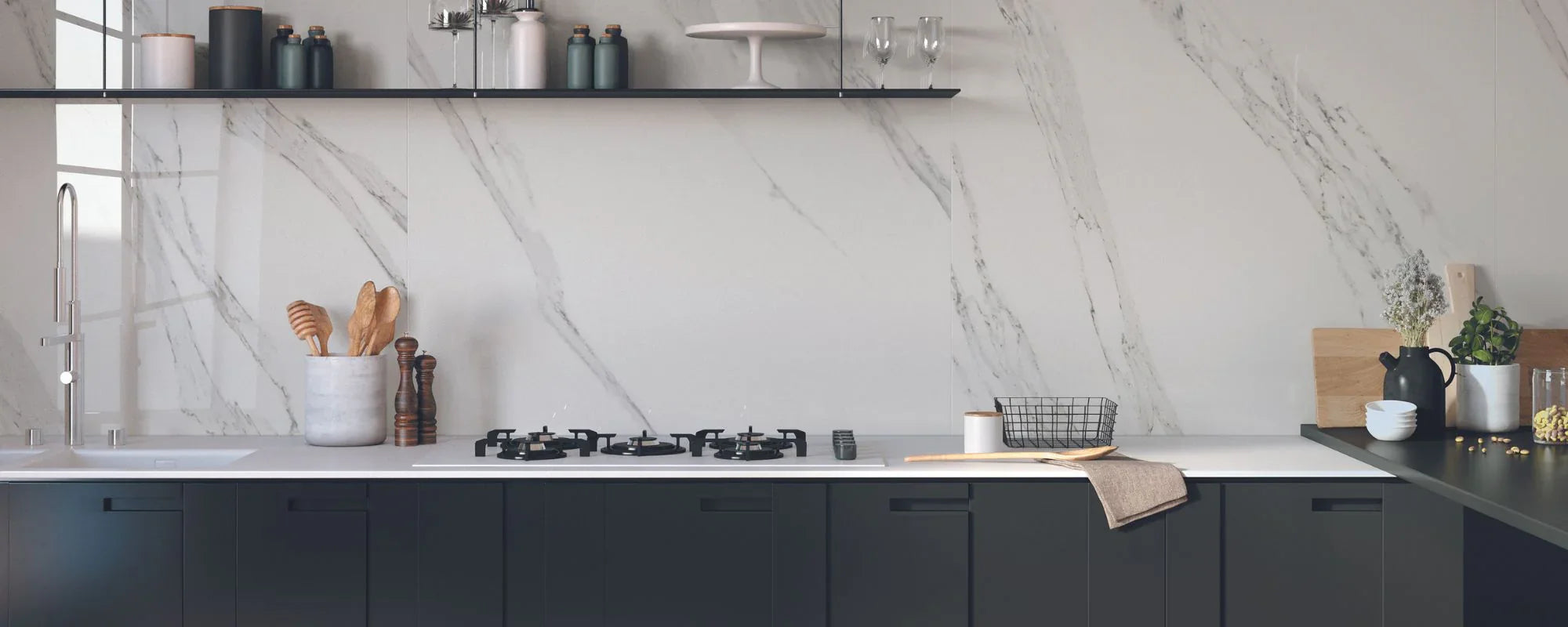
There’s a growing trend toward using backsplash tiles as a design moment rather than a background surface. Some kitchens benefit from subtle, tone-on-tone tile choices that quietly complement wood cabinetry or marble countertops. Others use bold patterns, mosaics, or handmade tiles to create a more personalised, statement-making design that reflects your unique style.
When exploring kitchen backsplash ideas, it helps to decide early whether you want:
- A backsplash that blends seamlessly into the kitchen walls
- A tile backsplash that acts as a focal point
- A balance between the two, where texture does the talking rather than colour
Bolder geometric patterns are favored in contemporary spaces for backsplash design.
This clarity makes it easier to narrow down tile materials, shapes, and layouts.

Choosing the Right Tiles for a Kitchen Backsplash
Different kitchen tiles offer different visual and practical benefits, making material choice one of the most important decisions.
Ceramic tile remains a favourite for backsplash tiles thanks to its versatility, durability, and wide range of colours and finishes. From classic subway tiles to modern shapes, ceramic tiles suit both traditional and modern kitchens.
Porcelain tiles offer excellent durability and stain resistance, making them ideal for busy cooking spaces where spills are part of daily life.
Glass tiles reflect light beautifully and can help smaller kitchens feel brighter, though they show marks more easily and require regular wiping with a damp cloth.
Stainless steel tiles work particularly well in modern kitchens and pair effortlessly with stainless steel appliances, creating a cohesive, professional feel around the hob.
Natural stone tiles, such as marble, add natural variation and elegance, but they require sealing and careful maintenance to protect against stains.
Hand painted tiles introduce charm and individuality, offering a unique style that feels handcrafted rather than mass-produced.
Tile Backsplash Materials and Durability
Durability is just as important as appearance, especially in high-heat zones near the hob or range.
Porcelain and stainless steel perform particularly well where heat and moisture are constant. Ceramic tiles are durable and easy to maintain, while natural stone and handmade tiles need a little more care to preserve their beauty.
Choosing materials that suit how you cook ensures your backsplash continues to look stylish long after installation.
Hand Painted and Handmade Tile Backsplashes
Hand painted tiles are often chosen for their character and artistic quality. Slight variations in colour, pattern, and shape give these tiles a depth that machine-made options can’t replicate.
They work beautifully as:
- A framed splashback behind a range
- A decorative panel in an otherwise modern kitchen
- A subtle pop of colour in a neutral space
Because handmade tiles are often more porous, sealing is essential to protect them from spills and stains, particularly in areas exposed to cooking splashes.

Styling Kitchen Backsplashes for a Timeless Look
While trends come and go, certain backsplash styling choices tend to age better than others.
Full-height tile backsplashes that run from worktop to ceiling create a clean, architectural look that feels intentional and modern. Subway tiles laid in a simple pattern offer a timeless look, while mosaics or bold shapes add interest when used in moderation.
Colour plays a key role too. Dark tiles can add drama and contrast, while lighter tiles reflect light and help keep the space feeling open. Even a subtle yellow or green tone can add warmth without overpowering the room.
Designing a Backsplash Around Stainless Steel Appliances
Stainless steel appliances often act as visual anchors in a modern kitchen. Pairing them with backsplash tiles that complement their finish creates a more cohesive look.
Matt or softly textured tiles balance the reflective nature of stainless steel, while grout colour choices can subtly enhance or soften contrast. Stainless steel tile sections behind the hob can also echo appliances while providing excellent heat resistance.
Installation and Maintenance Considerations
Some backsplash tiles are suitable for confident DIY installation, but complex patterns, mosaics, or large-format tiles are often best installed by a professional. Many tiles, such as ceramic, subway, and mosaic tiles, are designed for easy DIY install, allowing homeowners to install a backsplash in a weekend. Peel and Stick Tile is ideal for backsplashes that can be installed in one weekend for a DIY project.
Maintenance is generally simple:
- Wipe tiles regularly with a damp cloth or mild cleaner to keep backsplash kitchen tiles looking fresh
- Avoid abrasive cleaners that can damage grout or surfaces
- Reseal grout or natural stone as needed
Good installation and aftercare protect both the tile and the kitchen wall tiles beneath.

Kitchen Design Tips Using Backsplash Tiles
In smaller kitchens, simpler tile layouts and lighter colours help keep the space feeling balanced. Larger kitchens can handle bolder patterns or darker tones without feeling heavy.
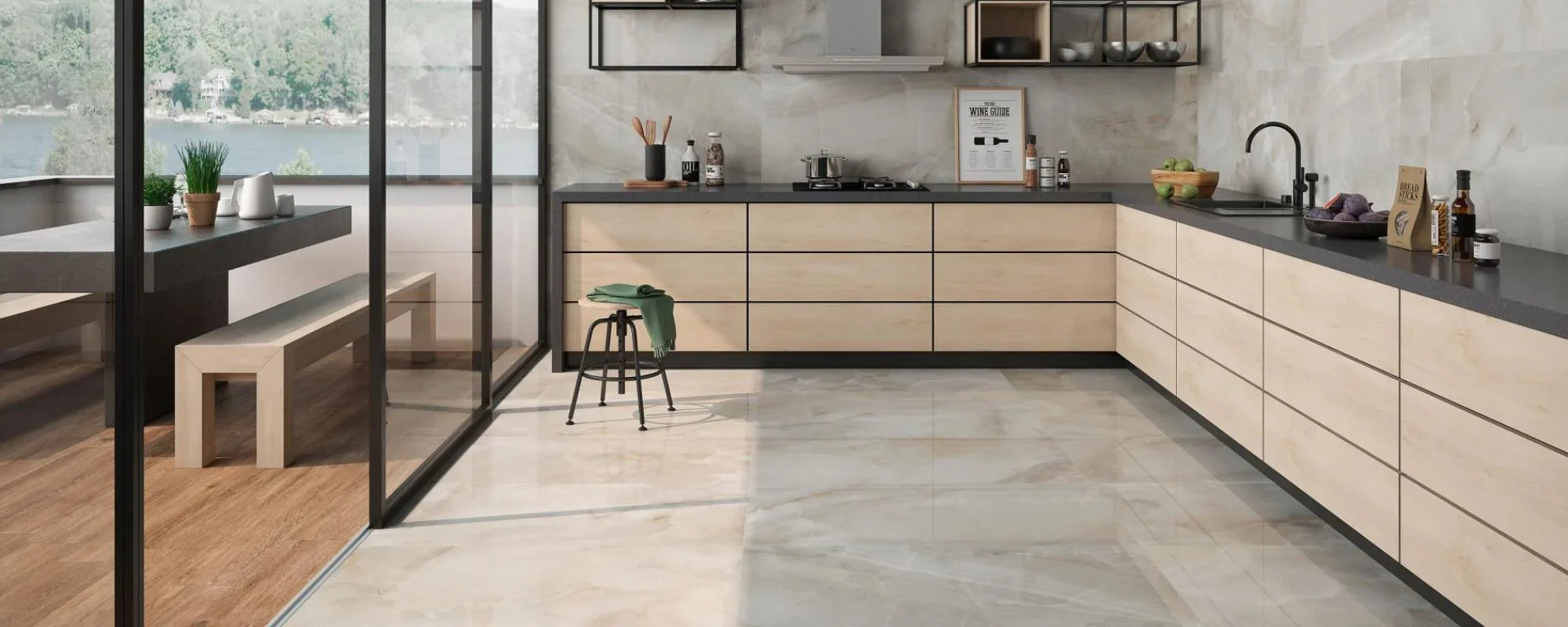
The backsplash should complement, not compete with, cabinetry, floor finishes, and worktops. Even when using bold tile, keeping surrounding surfaces calm allows the backsplash to shine without overwhelming the room.
Budgeting for a Kitchen Backsplash
Backsplashes offer one of the best opportunities to introduce style without exceeding budget. Because the tiled area is relatively small, investing in higher-quality or handmade tiles can still be achievable.
Ordering samples allows you to see how tiles interact with light, wood tones, marble surfaces, and cabinetry before committing, an essential step for achieving a perfect blend.
Final Thoughts: Elevating the Kitchen Through Thoughtful Tile Choices
Kitchen backsplash tiles may cover only a small surface, but their impact on the room is significant. When chosen with care, they protect, enhance, and personalise the kitchen, turning a functional splashback into a lasting design feature.
Whether your style is bold or subtle, modern or classic, the right backsplash tiles bring character, durability, and elegance to the heart of the home, and that’s what makes a kitchen truly complete.