Skip to content
Roccia.com

Warm Stone Floors: The Return of Honey and Sand Tones

Written by: Halima Bapu

For many years, interior design leaned heavily toward cooler palettes, pale greys, crisp whites and sleek surfaces. Recently, however, a noticeable shift has taken place. Designers and homeowners are rediscovering the appeal of warm stone floors, particularly those in honey, sand and softly golden tones.

These warmer shades of natural stone bring a sense of comfort and understated luxury to interiors. Rather than dominating a room, they create a gentle foundation that allows other materials and textures to shine. Whether installed as natural stone floor tiles in a kitchen or used as stone flooring throughout open-plan living areas, warm stone floors introduce natural beauty and character into the home.

Why Warm Stone Floors Are Returning to Modern Interiors

The renewed interest in warm stone floors reflects a wider design movement toward natural materials and softer palettes. Honey and sand-toned stone tiles feel welcoming and cosy, offering warmth that cooler grey flooring often lacks.

Warm-toned natural stone tiles also work beautifully with natural light, allowing the colour and subtle texture of the stone surface to evolve throughout the day. This means that floors feel alive rather than flat, with gentle variations that highlight the authenticity of real stone.

For modern interiors seeking balance between elegance and comfort, this natural flooring approach provides a great match.

The Natural Beauty of Stone Flooring

Natural stone flooring carries a distinct charm that manufactured materials often struggle to replicate. Each tile is unique, shaped by geological processes that create subtle patterns, veins and tonal shifts.

When used across a floor, natural stone tiles form a surface rich with variation and texture. This natural beauty allows stone flooring to complement a wide range of interior styles, from rustic homes to refined contemporary spaces.

For homeowners restoring a period property, warm stone floors can feel especially appropriate. The slightly irregular edges and natural markings of stone echo traditional craftsmanship while still fitting comfortably within modern design.

Roccia.com

Popular Natural Stone Choices for Warm Floors

Different types of natural stone create different atmospheres within the home. Understanding these options helps ensure the flooring you choose feels perfectly suited to the room.

Limestone: Soft Honey Tones and Timeless Appeal

Limestone is often the first choice when designing warm stone floors. Its gentle cream, honey and sand shades create a soft foundation that suits kitchens, bathrooms and open-plan living areas.

With honed surfaces and sometimes tumbled edges, limestone tiles can introduce a relaxed, slightly aged appearance that feels both elegant and natural.

Sandstone: Rustic Texture and Depth

Sandstone brings a slightly more rustic look, with visible grain and layered colour variation. This makes it particularly suitable for hallways, kitchens and spaces where durability is important.

Its warm tones allow it to sit comfortably alongside wooden cabinetry and natural materials, creating interiors that feel grounded and cosy.

Marble with Warm Undertones

While marble is often associated with cooler shades, certain varieties contain warm veins of honey, beige or gold. Used as marble floor tiles in a bathroom or feature area, these stones can add a sense of luxury without losing the warmth of the overall palette.

Stone Tile Finishes and Their Design Impact

The finish of stone tiles influences both their appearance and their practicality.

Honed surfaces provide a smooth, matte look that works well in modern homes, while brushed finishes introduce subtle texture. Tumbled edges create a softer, more rustic character, often seen in traditional or farmhouse-inspired interiors.

These small details help determine whether the final flooring feels sleek and contemporary or relaxed and natural.

Designing Interiors Around Warm Stone Flooring

Warm stone flooring works best when the surrounding materials complement its tone.

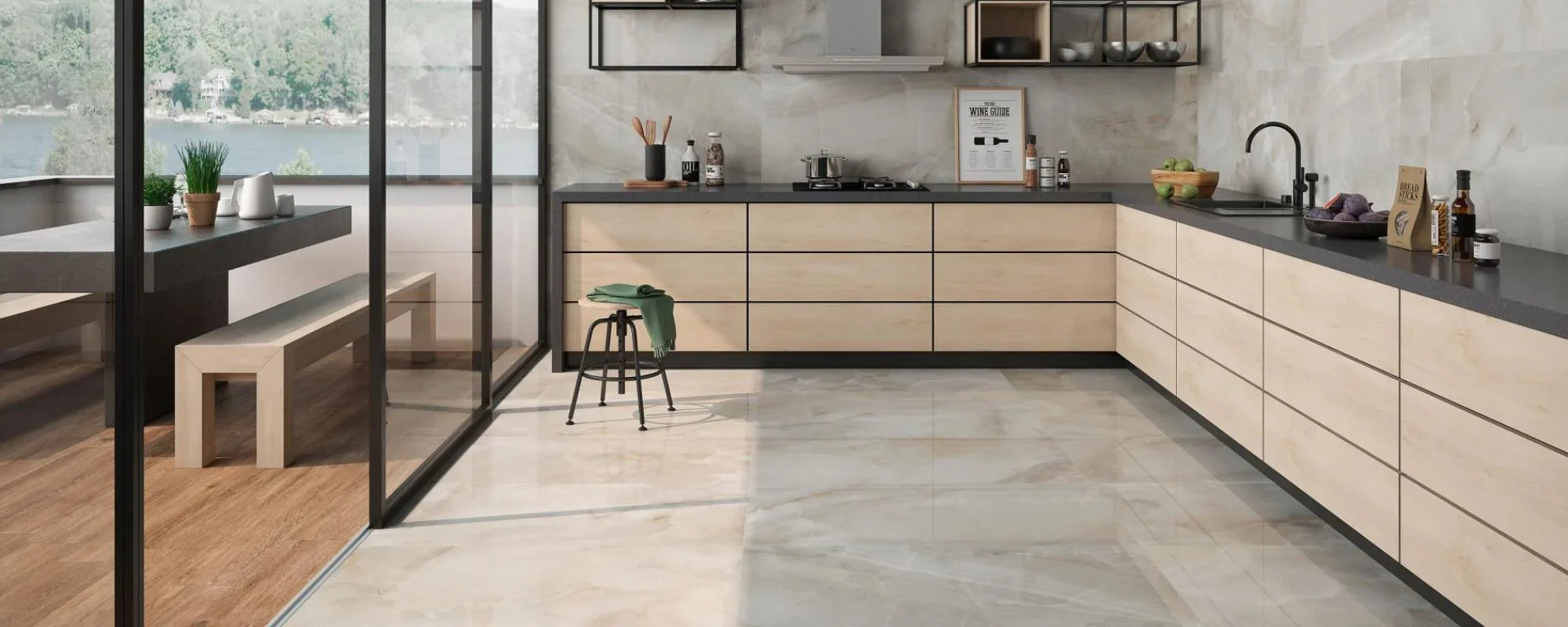
In kitchens, pairing natural stone floor tiles with timber cabinets creates warmth and balance. White or cream cabinetry can lift the space, while darker elements, such as black fixtures or darker worktops, add contrast and depth.

Bathrooms benefit from the softness of honey-toned stone surfaces, which help prevent the space from feeling cold. When combined with warm lighting and simple materials, stone tiles create a calm and spa-like environment.

Because stone flooring is visually consistent, it can also be used across multiple rooms, allowing the kitchen, hallway and living areas to feel connected.

Roccia.com

The Role of Underfloor Heating

Although warm stone floors naturally hold warmth, they are often paired with underfloor heating to increase comfort.

Stone conducts heat efficiently, meaning underfloor heating systems can warm the surface evenly across the room. This makes natural stone floor tiles particularly appealing in bathrooms and kitchens where comfort underfoot matters.

When installed correctly, underfloor heating enhances the cosy feeling of stone flooring without affecting its natural appearance.

Stone Effect Tiles as a Practical Alternative

For homeowners who love the look of natural stone but prefer a lower-maintenance option, stone effect floor tiles offer a compelling alternative. Stone effect tiles are ideal for high-traffic floors and bathroom walls.

Porcelain tiles designed with stone effect surfaces replicate the colour variation and texture of real stone while requiring less sealing and maintenance. Stone effect luxury vinyl tiles are 100% waterproof, making them suitable for bathrooms and kitchens. Stone effect flooring can be installed using either gluedown or click-fit options. These tiles are also highly durable and resistant to moisture, making them ideal for busy family homes.

Stone effect collections often include a wide range of tones and finishes, allowing homeowners to achieve the appearance of natural stone while enjoying greater practicality and ensuring long-lasting durability with minimal maintenance.

Roccia.com

Maintenance and Caring for Natural Stone Floors

Natural stone flooring can last for decades when maintained properly.

Because natural stone is porous, sealing helps protect the surface from moisture and staining. Regular cleaning with pH-neutral products helps maintain the stone’s natural beauty while preserving the sealant.

Over time, natural stone develops a subtle patina that many homeowners come to love. Rather than appearing worn, it often looks richer and more characterful.

Choosing the Right Stone for Your Home

Selecting the right natural stone tiles involves balancing aesthetics with practicality.

Ordering free samples allows homeowners to explore colour variation and surface texture in their own space before committing. Viewing several samples also helps ensure the tiles will create the perfect match with surrounding materials such as cabinetry, walls and furniture.

Because stone is a natural product, slight variation is expected, and this variation is often what gives the floor its unique charm.

Final Thoughts: A Foundation That Feels Warm and Timeless

Warm stone floors represent a return to materials that feel authentic, durable and connected to nature. Whether installed as real stone tiles or recreated through high-quality stone effect porcelain, these floors bring warmth, texture and understated luxury to modern interiors.

By choosing natural stone flooring in honey and sand tones, homeowners can create spaces that feel calm, welcoming and beautifully timeless, a foundation that supports the rest of the home’s design while quietly enhancing its character.

Got Questions? We've Got Answers.