Hallway Tile Ideas: Create an Entrance That Sets the Tone
The hallway is often the last part of the house we think about. It's somewhere we pass through rather than stay in.
Kitchens, living rooms, and bedrooms naturally get more attention because that's where we spend our time. The hallway connects one space to the next. But that's exactly what makes it intriguing.
With less furniture competing for attention, the floor can influence how the house feels from the moment you walk through the door. As interior designer Summer Thornton puts it, a hallway is an opportunity to make a statement rather than a space to be shy with.
So rather than asking whether your hallway is too small, too narrow or too dark, a better question is: what do you want your hallway to do?
Let the floor make the entrance
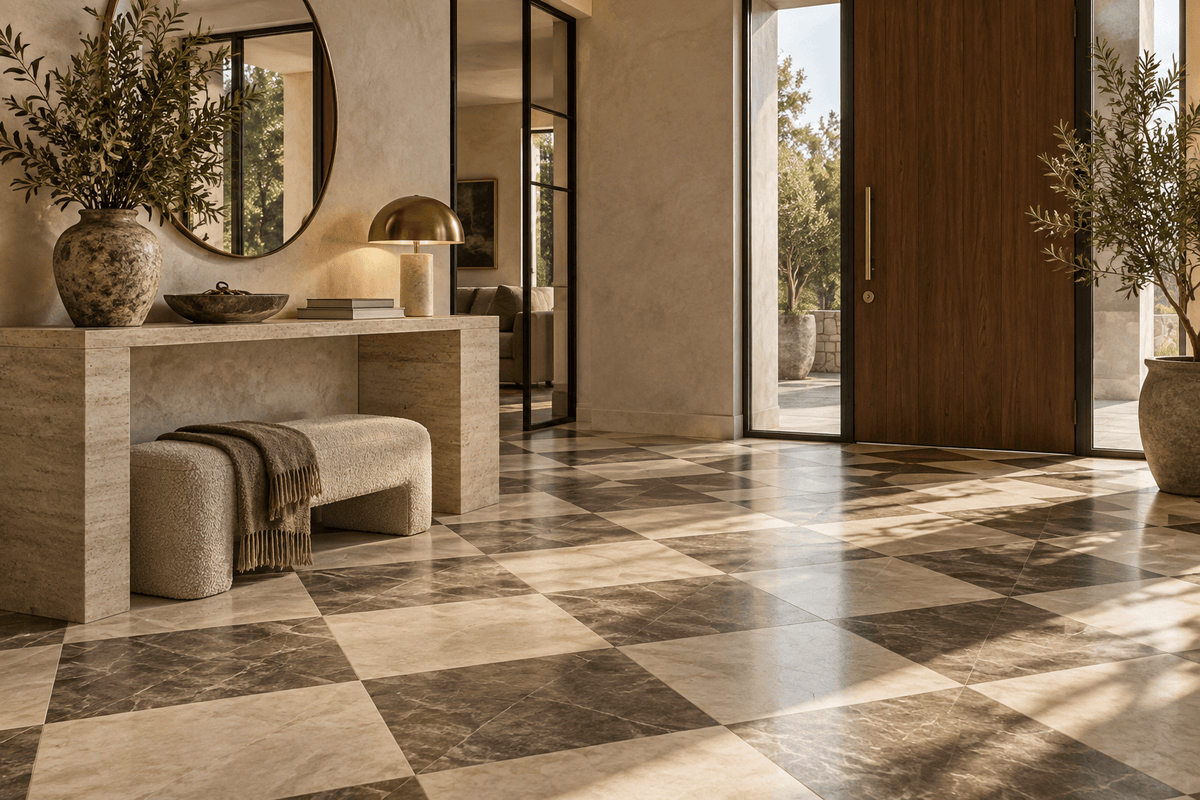
A hallway floor can establish the character of the house before you've reached the first room.
Pattern is an obvious way to do this. Thornton describes the hallway floor as a good excuse for a little drama.
A patterned floor can create movement through the space. That could mean a traditional geometric design, a checkerboard, a decorative porcelain, or something much more contemporary.
Albourne Grey brings decorative detail to the floor, giving the entrance a focal point while leaving the walls and surrounding finishes quieter.
The important thing isn't how elaborate the pattern is, but what it contributes to the entrance. A strong floor can make the hallway feel intentional rather than functional.
Pattern doesn't have to mean a patterned floor
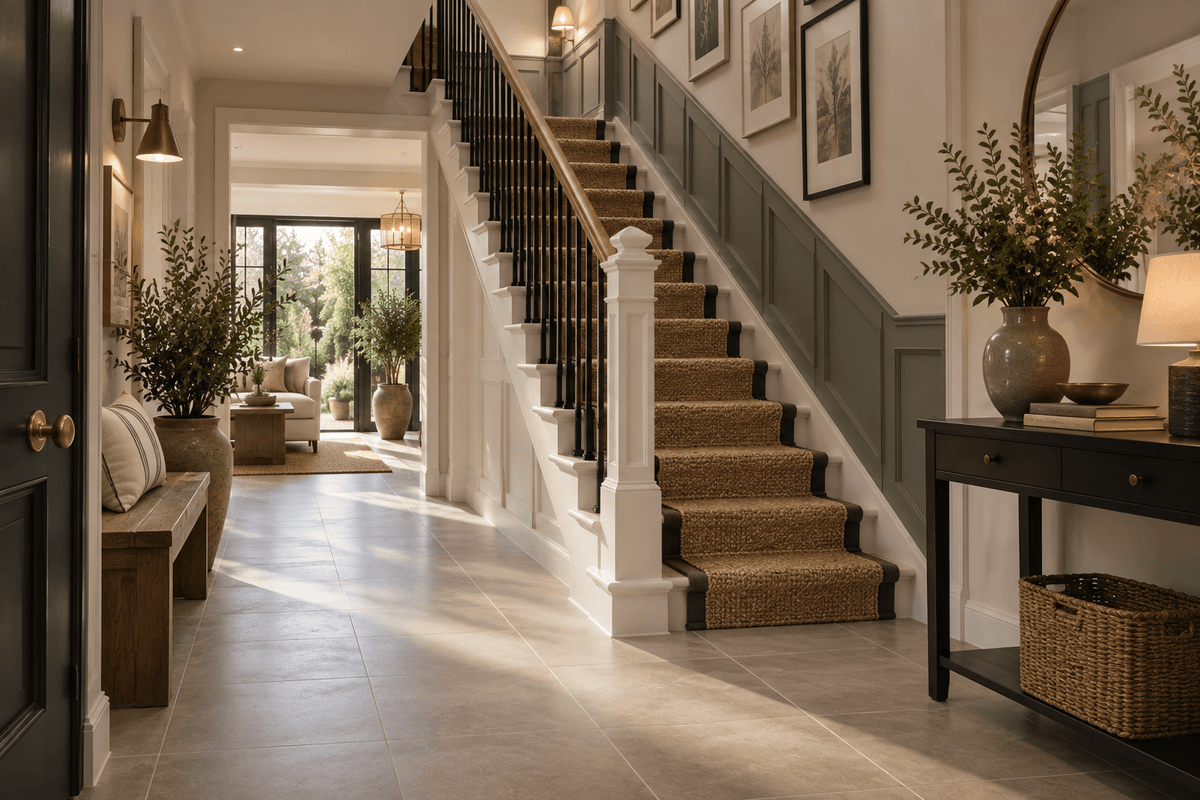
Pattern is often associated with decorative floor tiles, but it can come from almost anywhere in a hallway.
Wallpaper, wall tiles, artwork, a stair runner, painted stair risers, or even a repeated colour can introduce pattern and rhythm. If the walls are already doing the work, a quieter floor may create a better balance. If the walls are restrained, the floor has more room to become the feature.
This is particularly useful in a space that connects several rooms. The hallway doesn't have to compete with everything around it.
A hallway is somewhere you pass through rather than settle into, so it can be a good place to try a colour or pattern you might find too dominant in a living room.
The same principle works with tiles. A hallway allows you to introduce something with character that might feel too dominant in a room where you spend hours at a time.
Keep the floor quiet
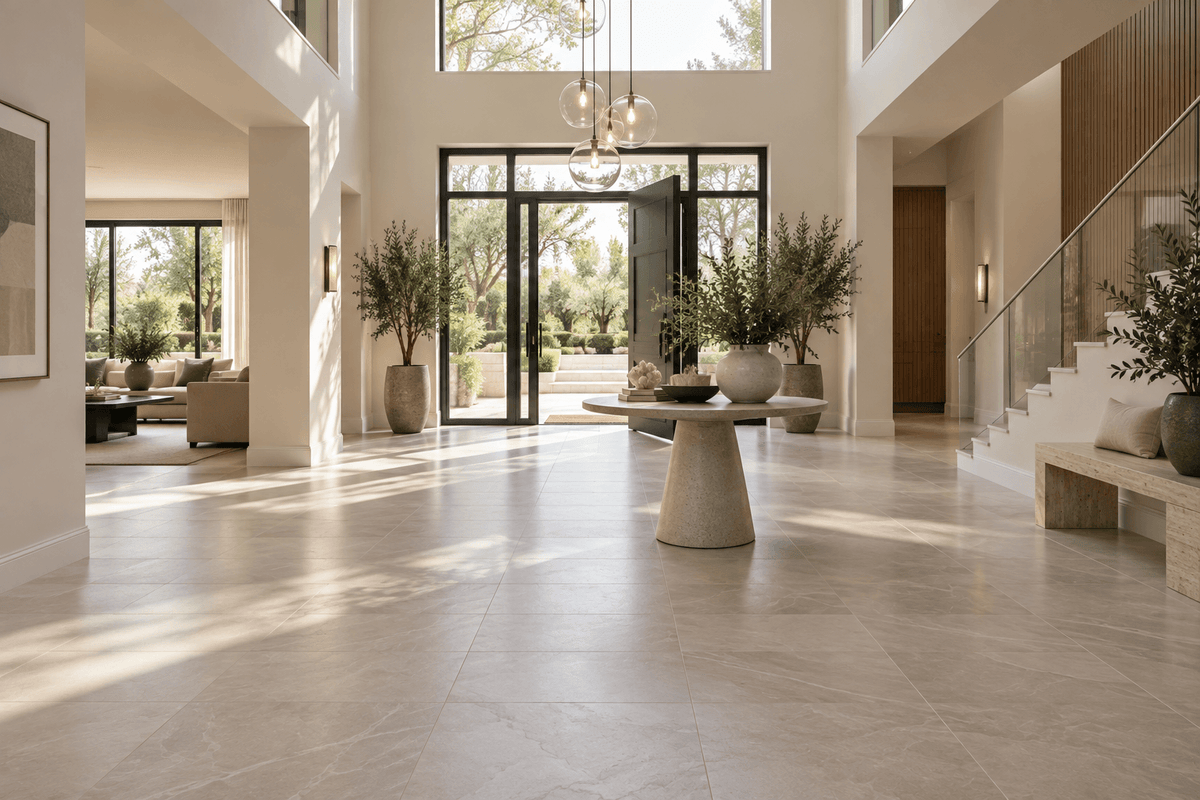
Of course, making an entrance doesn't mean choosing a decorative tile.
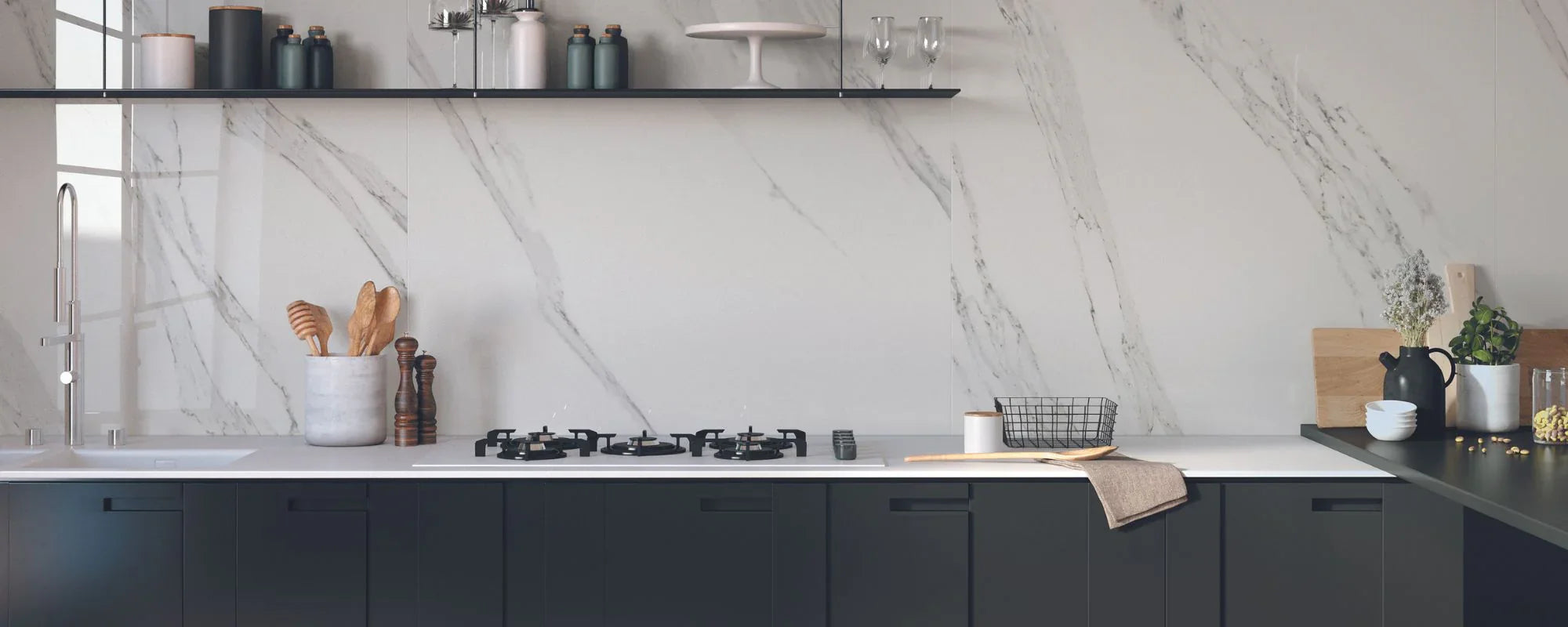
A quiet stone-effect floor can be just as considered. Large-format porcelain, softly veined marble effects, and warm neutral tones can create a sense of calm, letting the architecture, artwork, or other materials lead.
The interest comes through materiality rather than pattern: subtle tonal variation, a matt surface, natural-looking movement, or the way the tile responds to changing light.
Glow White Sugar Effect follows this approach, pairing a pale stone-effect surface with a subtle shimmer that catches the light.
There's no need to make the hallway a feature simply because it's a hallway. Sometimes the most successful choice is one that gives the rest of the house room to speak.
Use the floor to connect the house
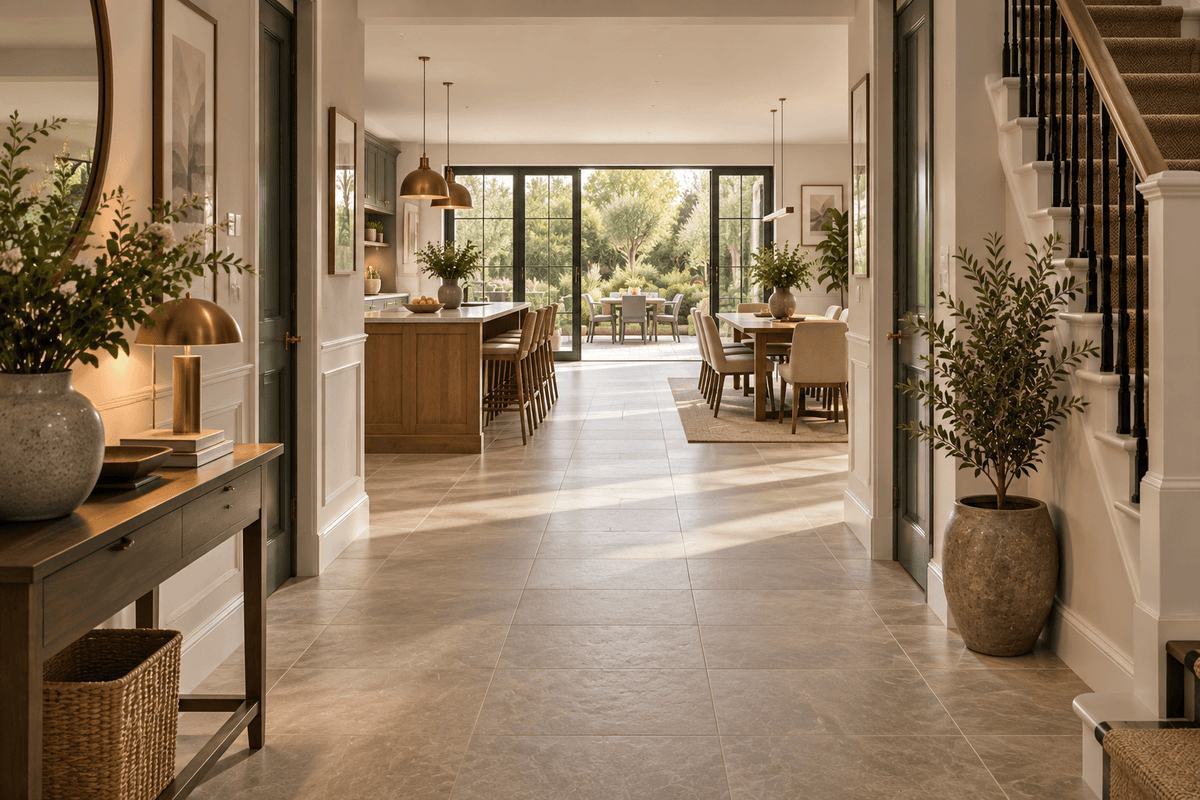
Because the hallway sits between rooms, it can play an important role in how the whole house connects.
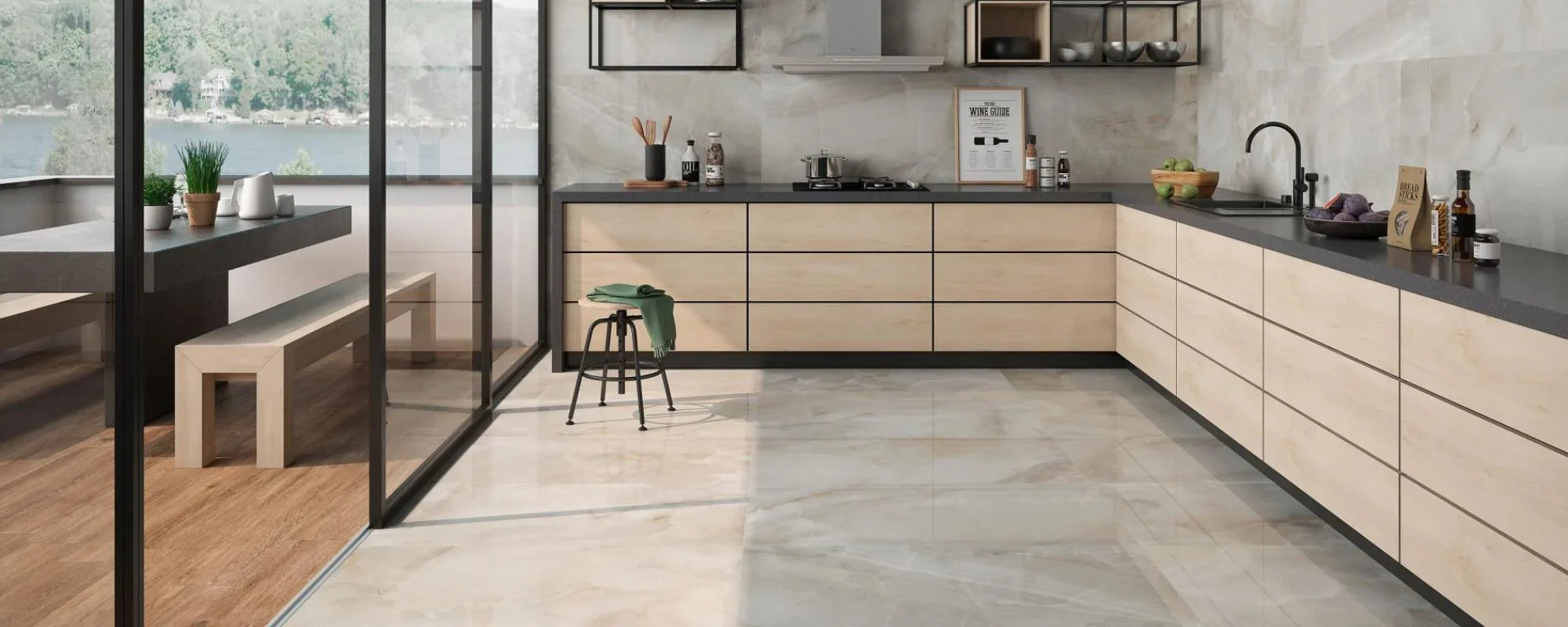
Continuing a tile from the hallway into an adjoining kitchen or utility space can create a sense of flow and make separate areas feel part of the same composition. Alternatively, a different tile can deliberately mark the entrance and give the hallway its own identity.
Neither approach is inherently better.
The decision should come down to whether continuity or contrast makes more sense for the house. A matching floor can create calm and cohesion, while a change in material or pattern can make the entrance feel more defined.
The key is to avoid matching simply for the sake of matching.
Bring colour underfoot
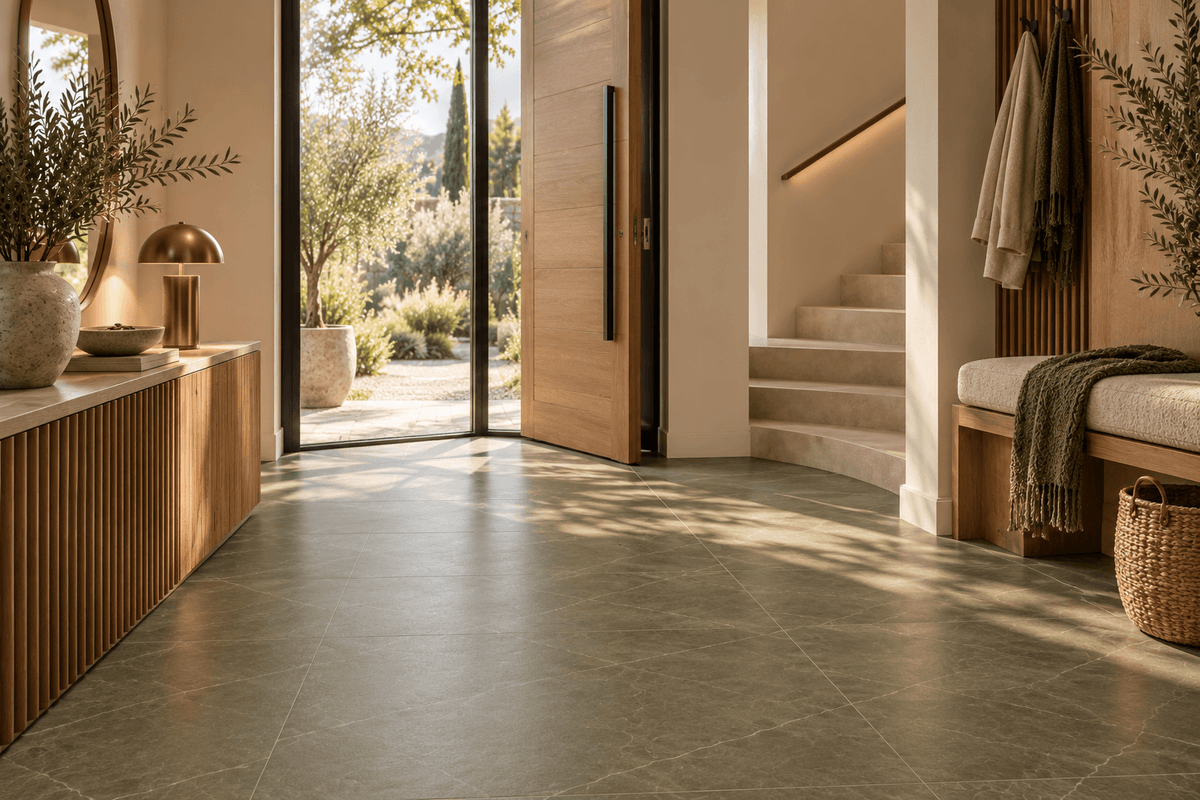
Colour is another way to change hallway character without relying on a highly decorative pattern.
Muted green, earthy brown and soft clay tones can add depth to an entrance, particularly when paired with natural wood, painted joinery or warm metals.
Colour doesn't have to be bright to have an impact. A stone-effect tile with subtle brown or green undertones can introduce atmosphere while remaining relatively restrained.
Look at the colours already present elsewhere in the house and consider whether the hallway could pick one up. Even a small connection can make the transition feel deliberate.
Think about the layout as much as the tile
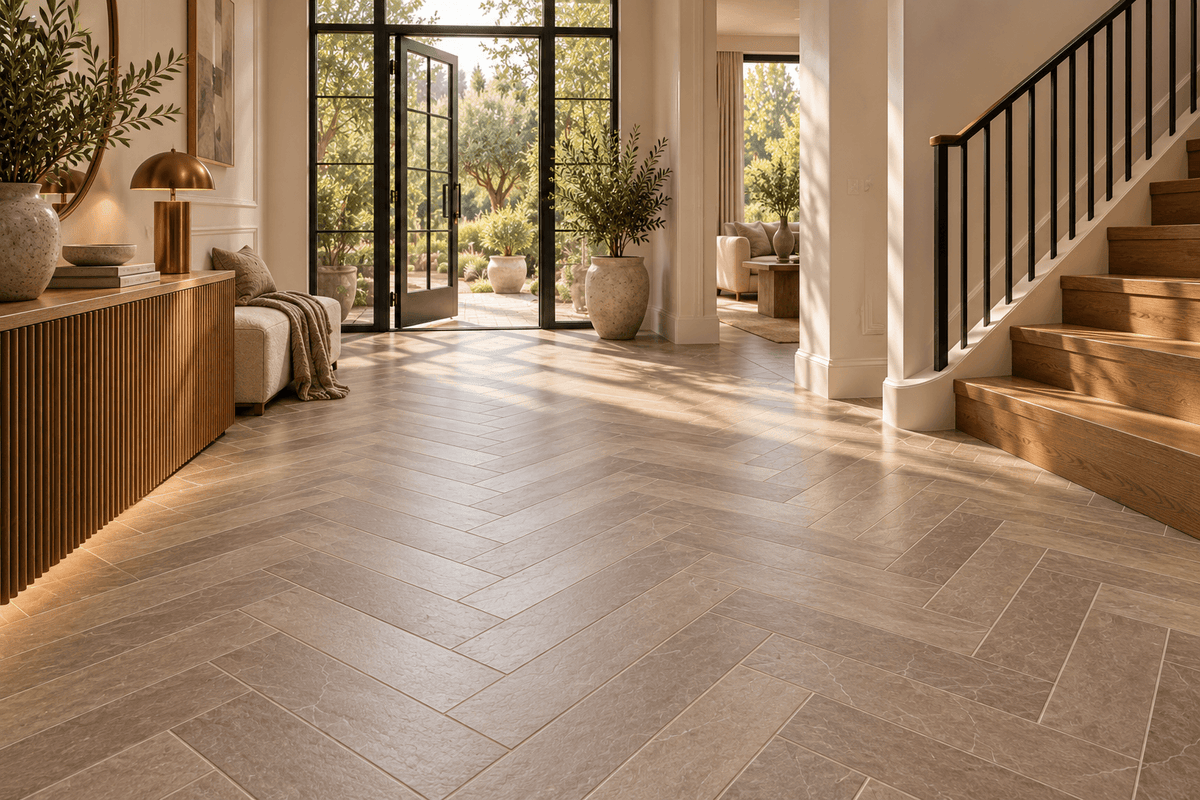
The tile is only half of the design decision.
How it's laid can completely change its appearance. Herringbone, brick bond, straight grid layouts, borders, and more decorative arrangements each create a different sense of movement and proportion.
Interior designer Irene Gunter has highlighted how flooring patterns can influence the way a hallway is perceived, from seamless-looking surfaces to mosaics and geometric shapes.
That's worth considering when choosing a tile. A simple tile can become much more distinctive through its layout, while an intricate tile may need a simpler arrangement to let its pattern breathe.
The tile and the way it's laid are one design decision.
Let the architecture guide you
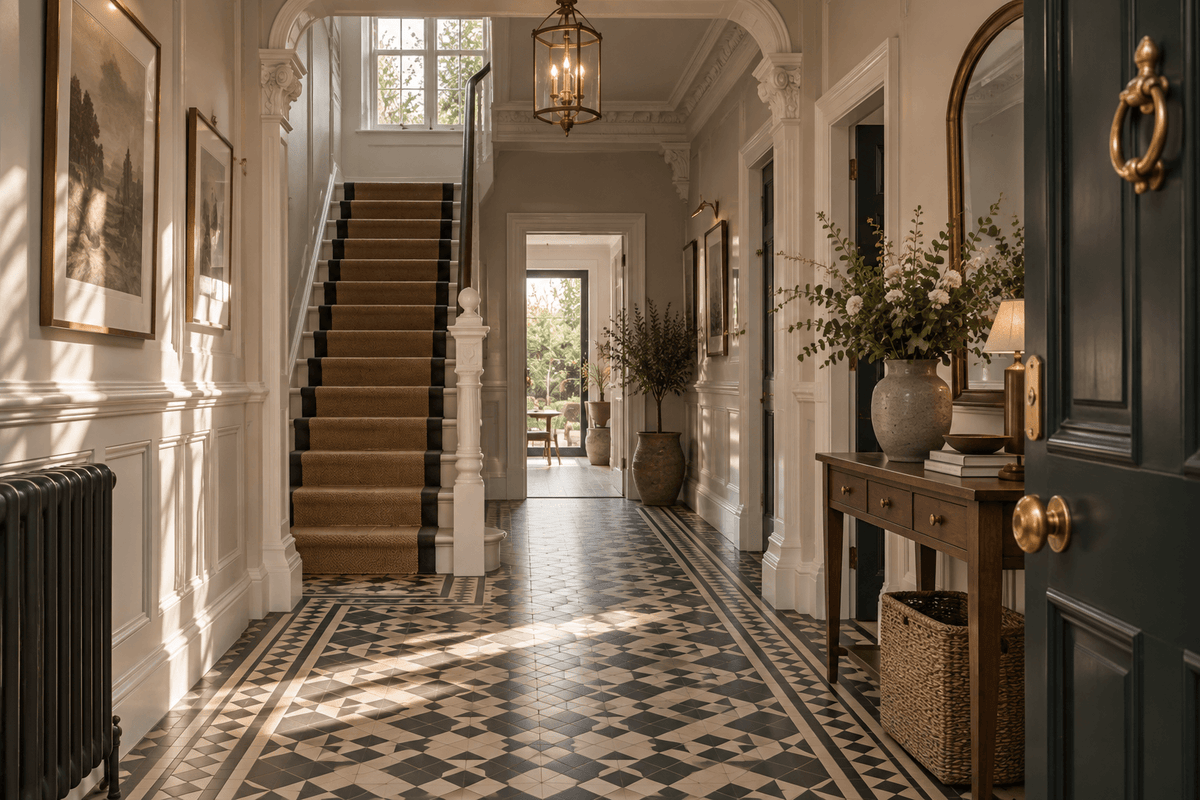
The architecture of the house can provide a useful starting point, but it doesn't have to dictate the final look.
In a period property, smaller formats, borders and geometric patterns can sit naturally alongside original details. In a contemporary house, large-format porcelain, concrete effects, terrazzo or quieter stone-inspired surfaces can reinforce a cleaner architectural language.
But a period house doesn't require a period-style floor.
Equally, a contemporary house doesn't need to be covered in oversized tiles simply because the architecture is modern.
The most interesting spaces often come from the relationship between old and new. A traditional property can handle a contemporary geometric floor, while a modern hallway can gain warmth from a more tactile, natural-looking surface.
From mosaics to large-format tiles
Tile size has a particularly noticeable effect in a hallway.
Smaller tiles introduce rhythm and detail. Mosaics can create intricate patterns and give the floor a more decorative quality, while larger formats create broader areas of uninterrupted surface.
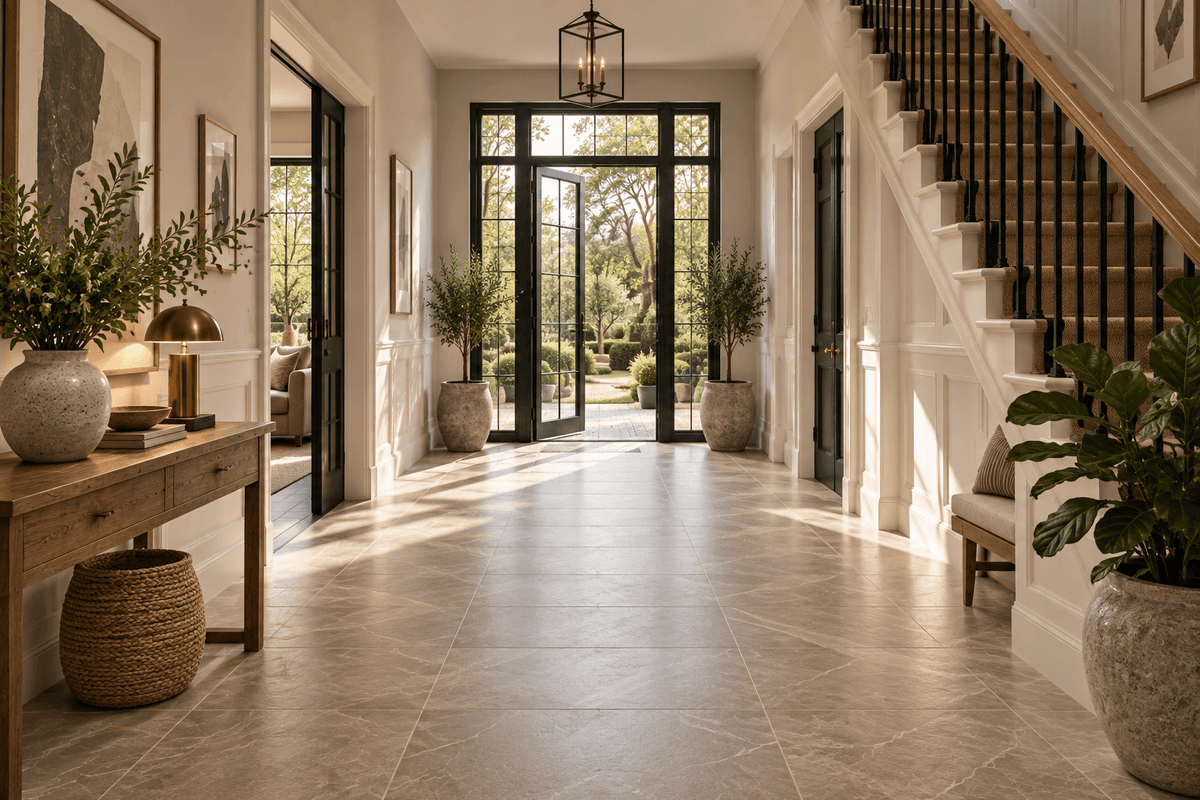
Neither is automatically more sophisticated. Dorset Bone’s 80 × 80cm format creates a broader, simpler floor grid, allowing the staircase and surrounding architecture to take more of the attention.
A large-format tile can make a space feel calm and architectural, but a smaller format can bring texture, scale and character. The right choice depends on the hallway proportions and the atmosphere you want to create.
Irene Gunter's approach to hallway flooring is a useful reminder that the visual boundaries between tiles can be just as important as the tiles themselves.
Choose a material with character
Porcelain gives you considerable freedom when choosing a hallway floor.
Stone effects can introduce natural variation without requiring the maintenance associated with some natural materials. Marble effects bring veining and movement. Concrete and terrazzo effects offer something more contemporary, while terracotta-inspired tiles can add warmth and a sense of age.
Natural stone is another option where the material variation itself becomes part of the design.
Look beyond the material name and consider what it actually contributes to the space.
Does it introduce movement? Warmth? Texture? Contrast? Does the surface change subtly as the light moves across it?
A practical material doesn't have to look practical.
Don't forget the walls
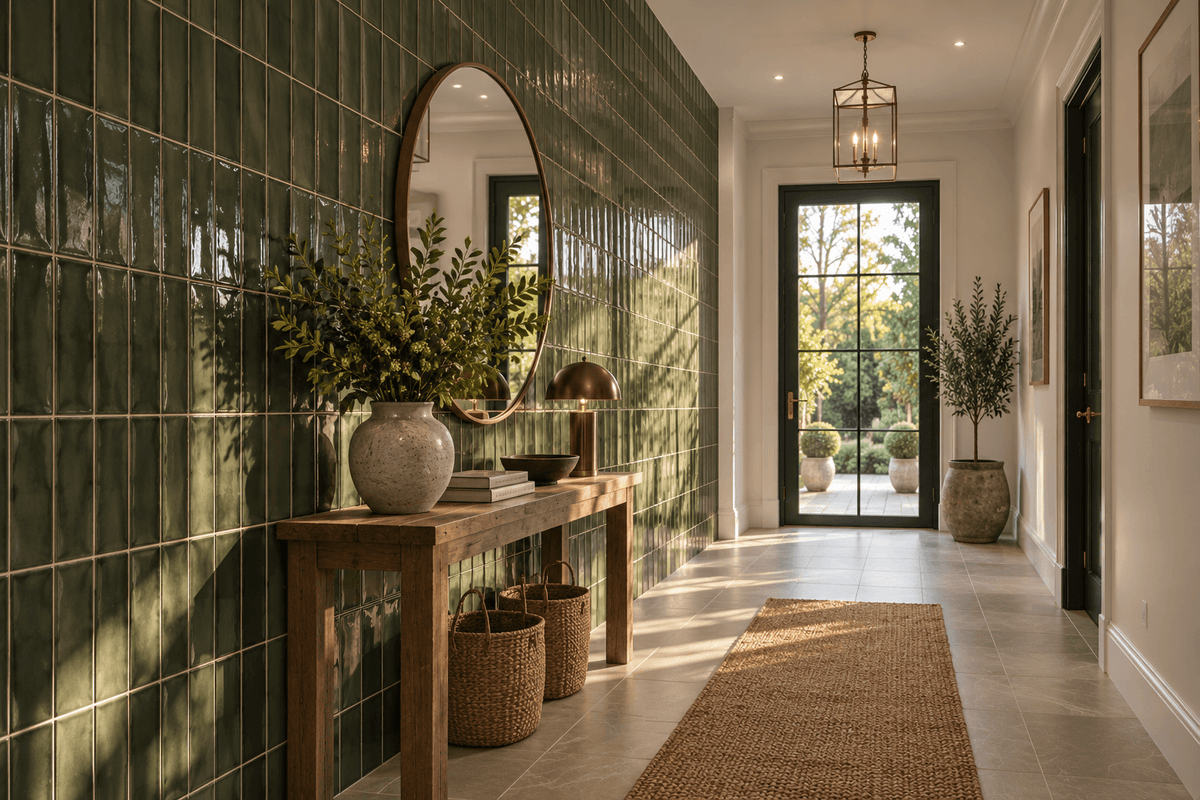
The hallway floor doesn't exist in isolation.
Wall tiles can introduce texture or colour, while painted walls, wallpaper, panelling and artwork all change how the floor is perceived. The relationship between the two is often more important than either choice on its own.
A patterned floor might work best with quiet walls. A restrained stone-effect floor could allow more freedom with wallpaper or colour above it.
Rojo Emerald Green brings deep colour and a glossy finish to that quieter floor pairing, whether used as a small feature or a lower wall treatment.
Think of the hallway as a complete composition rather than choosing the floor first and everything else afterwards.
Make the practical choice part of the design
Hallways have to work hard.
They deal with outdoor shoes, everyday traffic, muddy feet, and whatever else gets brought through the front door. That makes durability, slip resistance, finish, cleaning requirements, and installation important considerations when choosing a tile.
But practical decisions do not have to dictate the aesthetic.
A well-chosen porcelain can provide the performance needed for a busy entrance while still delivering the colour, texture and character you want. The best practical choices are often the ones you barely notice because they have been integrated into the design from the beginning.
Finding your hallway tile idea
The hallway doesn't need fixing; it needs considering.
Think about what you want the space to contribute to the house. Perhaps that means a patterned floor that immediately establishes personality. Perhaps it's a quiet stone-effect surface that creates continuity between rooms. Or maybe colour, texture or an unexpected layout is enough to give the entrance its own character.
There's no single formula for a successful hallway.
Start with the space itself, then consider the relationship between tile, pattern, colour, material and architecture.
Explore the full ROCCIA Hallway Tiles collection for tiles that can help shape your entrance, or explore our Hallway Wall Tiles collection or Hallway Floor Tiles collection for more inspiration.