What is SPC Flooring? How it's Made & Where it Works
SPC flooring is a type of rigid vinyl flooring with a core made from limestone powder, PVC, and stabilisers. The initials usually stand for stone-plastic composite, also called stone-polymer composite. A printed surface gives it the appearance of materials such as wood or stone, while a protective wear layer helps it withstand everyday use.
If you like the look of wood but want a floor that can handle busy family life, SPC is worth a closer look. Its core helps give the boards strength and stability, but you’ll also want to understand the surface and fitting requirements before deciding where to use it.
What's inside an SPC floor?
Each layer has a different job. The exact construction varies, but here’s what you’ll usually find inside an SPC plank:
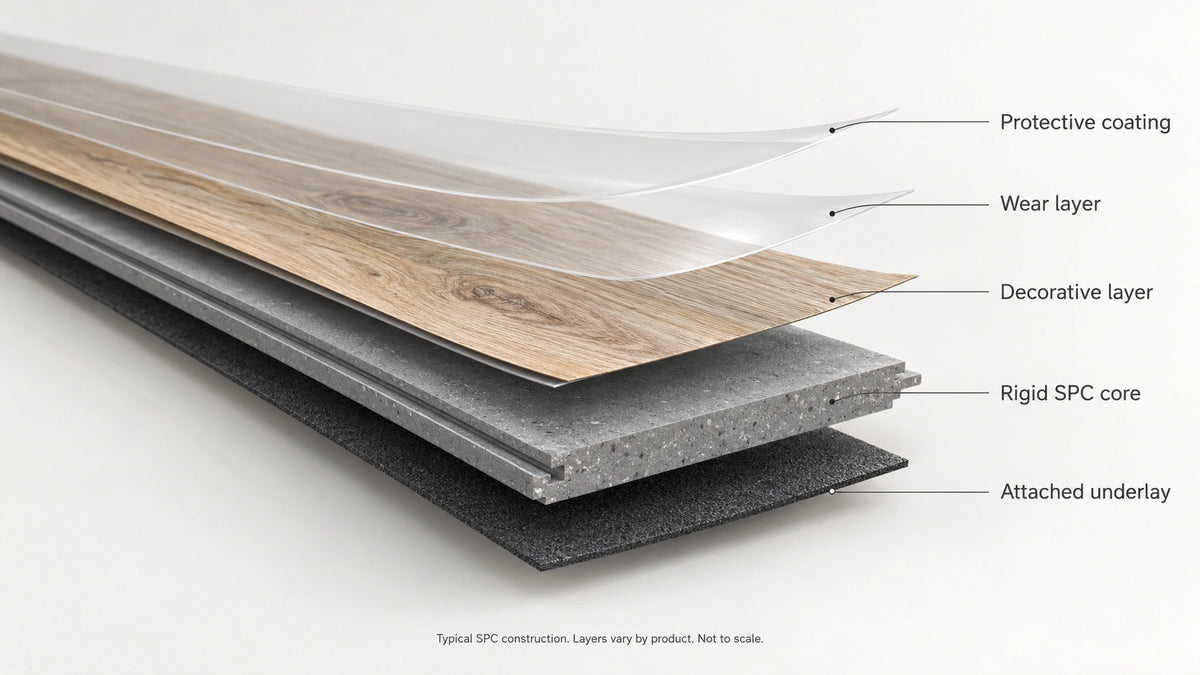
The coating and clear wear layer help protect the surface. Beneath them, the decorative layer creates the wood or stone effect, while the rigid core gives the plank its structure. Where included, the attached underlay can help soften sound and improve comfort underfoot.
How SPC relates to LVT
SPC belongs to the wider luxury vinyl flooring family. LVT means luxury vinyl tile, while LVP means luxury vinyl plank. You’ll see SPC described using either term, depending on the format and how the manufacturer labels it.
When you see “SPC vs LVT”, the comparison is usually between rigid SPC and traditional flexible vinyl. Flexible LVT is often glued to a prepared base, while SPC commonly clicks together as a floating floor. There are flexible click vinyl floors too, so it’s worth checking what’s inside the board as well as how it fits together. The Resilient Floor Covering Institute’s guide to rigid core flooring explains this relationship in more detail.
The surface gives the room its character
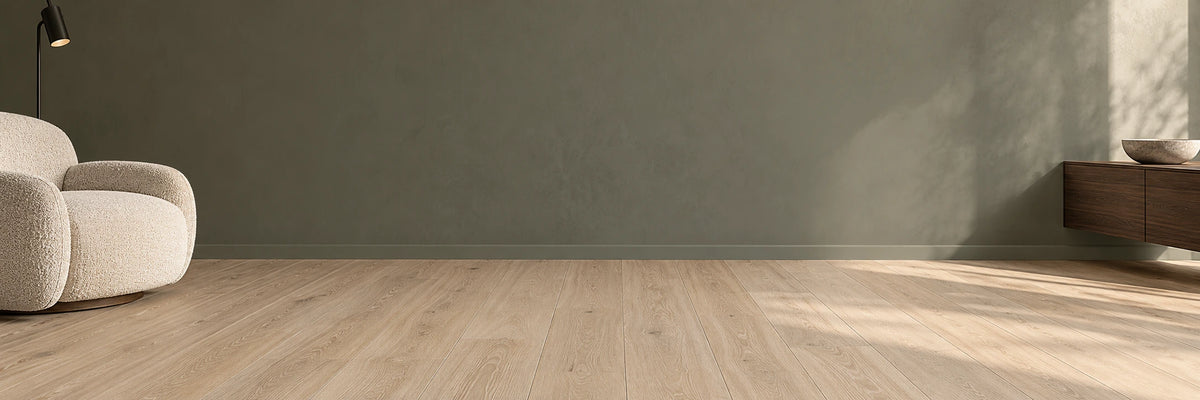
The stone in the core doesn’t dictate the look of your floor. A pale oak effect can keep the floor visually quiet beside coloured cabinetry or patterned fabrics. A warmer design with pronounced knots brings more movement underfoot, particularly across an open stretch of flooring.
You can see the difference between La Vista Classic Linen Oak and La Vista Signature Sherwood Forest. Linen Oak’s pale colouring makes a gentle backdrop to the hallway below. Sherwood Forest’s warmer tones and visible grain give the floor a stronger presence.
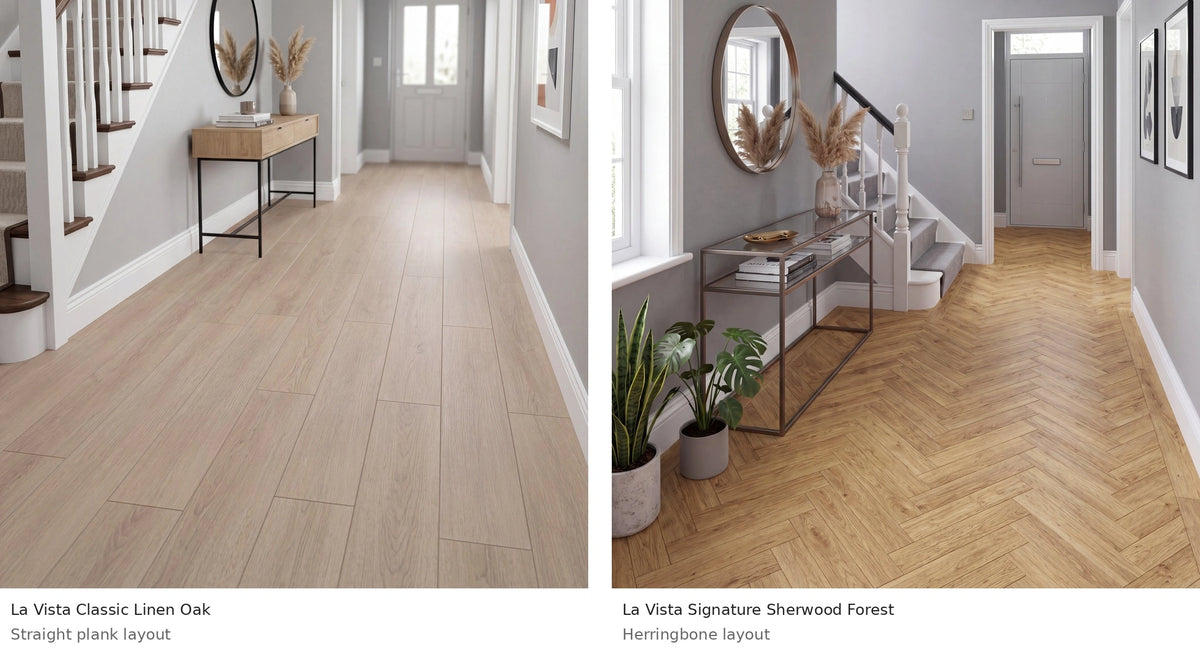
Layout changes the effect too. Straight planks create long lines through a space; herringbone introduces a repeating pattern. As you compare these images, notice how the colour and the layout each contribute to the room.
A sample helps you see the details a screen can’t quite capture. Hold it beside your paint and furniture to compare the colour, sheen and texture, then look at a room image to judge how the grain repeats across a larger floor.
Is SPC flooring good for everyday life?
SPC can be a practical choice if you want a wood or stone effect that’s easy to care for. Its dense core helps the boards stay stable and resist indentation, while the surface layers protect the printed design from everyday wear.
It isn’t immune to damage. Grit and dragged furniture can mark the surface, and rigid boards still need a properly prepared base. You’ll also notice a firm feel underfoot. If comfort is a priority, try walking on a fitted display as well as handling a sample.
Think about what your household needs from the floor. Check the wear layer, which rooms it’s approved for, and what the warranty covers to get a clearer picture of its durability.
Where can you use SPC flooring?
You’ll find SPC floors made for living rooms, bedrooms, hallways and kitchens. Check that your chosen product is approved for the room you have in mind. Bathrooms need a little more thought, especially when it comes to what “waterproof” means.
Bathrooms and water resistance
Yes, you can use SPC flooring in a bathroom if the manufacturer approves it. La Vista is suitable for bathrooms, provided it’s fitted correctly, including the details around the room’s edges.
A waterproof plank doesn’t automatically make the whole floor watertight. Depending on the system and how it’s fitted, water can still reach the base through joints or around the edges. The floor beneath still needs the right moisture protection.
Wipe up splashes promptly and follow the instructions for sealing the edges. A bathroom rating doesn’t automatically cover a walk-in shower or wet room. For those spaces, you’ll need flooring and a waterproofing system specifically approved for that use.
Outdoor spaces and sunrooms
Keep standard indoor SPC inside unless the manufacturer specifically approves outdoor use. Being water-resistant doesn’t mean a floor can handle the weather, direct sunlight, or outdoor temperature changes.
Planning a floor for a conservatory, an unheated room or a space beside large glazed doors? Check these areas separately. Temperatures can change more sharply here than in the rest of your home.
What SPC click flooring means for fitting
“Click” describes how the plank edges lock together. Most SPC click floors float over the subfloor, with the boards connected rather than glued to the base. That can make fitting simpler, although you’ll still need to prepare the floor beneath.
The subfloor needs to be flat, dry, and stable enough for the product you’ve chosen. Some systems can go over an existing hard floor, but loose tiles, deep grout joints or uneven patches may need attention first. A click joint can’t make up for an unsuitable base.
Expansion gaps leave room for the floor to move as temperatures change. Even a stable rigid core needs this space. Your installation instructions will explain how wide the gaps should be and whether you’ll need breaks between rooms or across a large area.
La Vista comes with underlay already attached, so you don’t need to buy or fit a separate layer. Other SPC products may need a compatible underlay, so check the instructions for the floor you choose. Only add an extra layer if the manufacturer approves it: too much cushioning can allow movement that strains the joints.
Can SPC work with underfloor heating?
Many SPC floors can work with underfloor heating, including La Vista when paired with a compatible system. Before ordering, check that your chosen floor works with your heating. The instructions should explain the temperature limits, which systems are suitable, and how to bring the heating up to temperature gradually.
How thick is SPC flooring?
You’ll see a few thickness measurements when comparing SPC floors. These two tell you different things:
Overall thickness is the full depth of the board, sometimes including attached backing. You’ll need this measurement to check whether doors will clear the new floor and how it’ll meet the flooring next door. In our La Vista collection, Classic is 4mm thick, while Select and Signature are 6mm. Check your chosen product and format for the exact build-up.
Wear-layer thickness measures the protective layer above the printed design. Read it alongside the product’s use rating and warranty to understand how it suits everyday traffic. A thicker board doesn’t automatically have a thicker wear layer.
How long does SPC flooring last?
There’s no single lifespan for SPC flooring. How long yours lasts depends on the surface and locking system, how well it’s fitted, how much use it gets, and how you care for it.
A warranty tells you what the manufacturer will cover, rather than when you’ll need a new floor. Read the exclusions for wear, scratches and fitting, and check that the cover applies to the room you’re planning.
You can’t sand back and refinish SPC’s printed surface as you can with solid timber. A badly damaged board may need replacing. How easy that is will depend on the locking system and where the board sits in the room.
How to clean and care for SPC flooring
A little regular care helps protect the finish. Sweep or vacuum away grit, then damp mop with a cleaner approved for your flooring. Wipe up spills and use suitable pads under furniture legs to help prevent scratches. Avoid abrasive tools, and only use a steam mop if the manufacturer specifically allows it.
Before choosing your floor
Start with the room you’re planning. How much use will it get? Are splashes, underfloor heating or strong sunlight part of the picture? With that in mind, compare the look, wear layer, overall thickness and fitting requirements of the floors you like.
When working out your budget, allow for preparation, fitting, trims and cutting waste alongside the price per square metre. A click system can simplify fitting, but those other costs still need a place in your plans.
Explore ROCCIA’s SPC flooring collection to compare colours and layouts. Try samples alongside the other materials in your home, then check the practical details for your room before ordering.