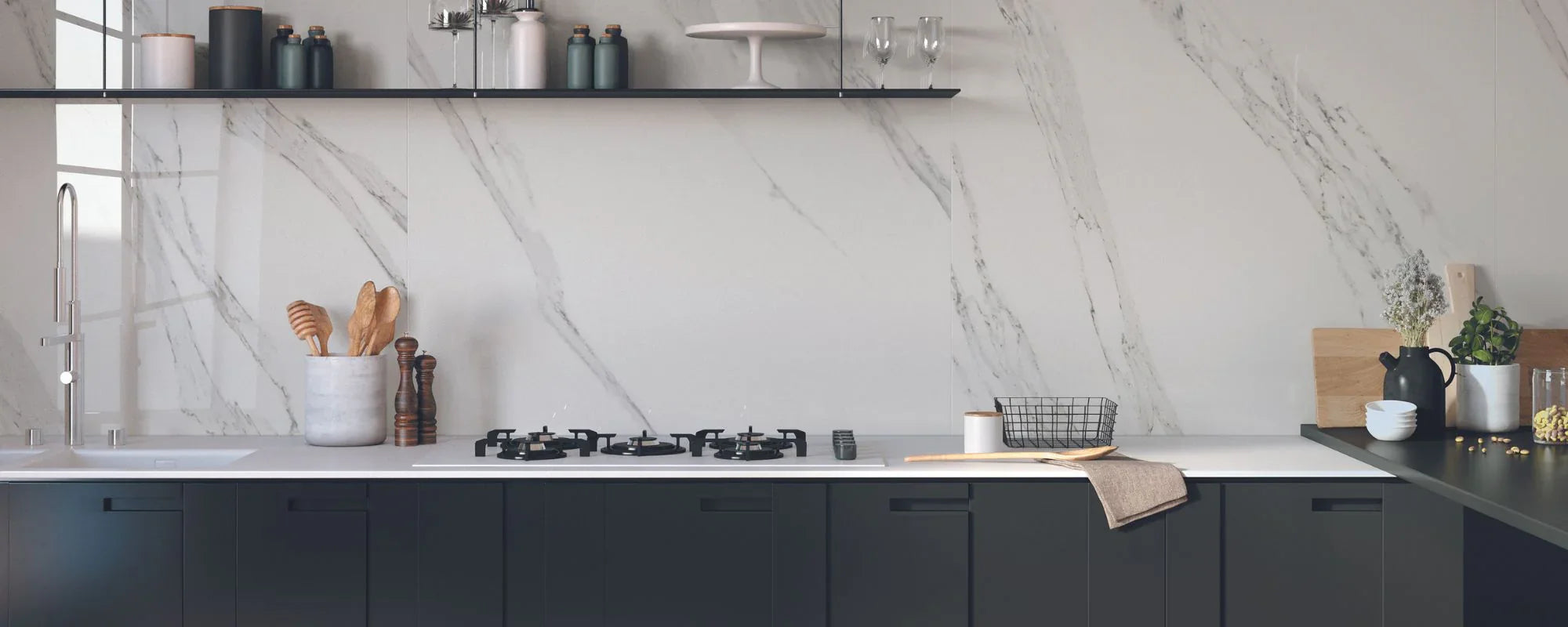
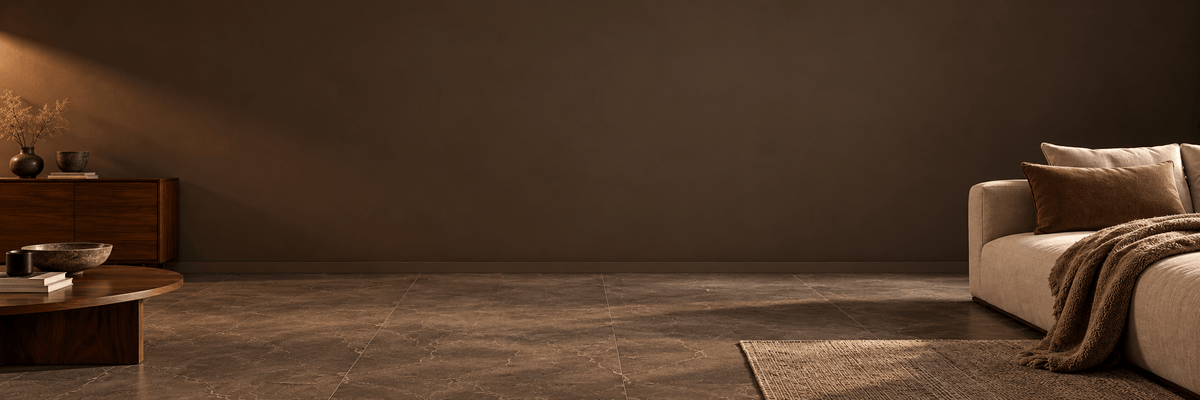
Living Room Tile Ideas: Shape a Space That Feels Like You
Living rooms hold more of our everyday lives than almost any other space. They are a place to read, gather, stretch out, and spend an evening coddling your interests. The floor and walls help set the atmosphere, but they share that job with the sofa, the lighting, the books and the objects we bring home.
The most useful living room tile ideas begin with those relationships. What do you want the room to feel like? What is already working? And where could a different colour, texture or pattern take it somewhere new?
Start with what you already love
A favourite armchair, a painting or the colour of a wood cabinet can give you a more personal starting point than a list of interior trends. If you are keeping those pieces, let them join the conversation from the beginning.
Look at their colours and textures. A honey-toned table might sit comfortably beside a sandy stone effect; a green velvet sofa could bring depth to a pale floor or become part of a richer, earthy palette. Neither combination is a rule. Both are directions worth trying.
Try this before browsing: save three living rooms you love and write down what draws you to each. Look beyond the tile. Is it the contrast, the softness, the colour, or the way the room feels relaxed? Then look for something those rooms share.
What do you want to keep in your room—and what would you like to change?
Find your version of warmth
Tiles can feel like an unexpected choice for a living room, especially if you associate them with cool kitchens or bathrooms. But a tiled room's atmosphere comes from the whole palette, not the flooring alone.
Colour and texture
Warm beige, clay and brown tones can introduce an earthy foundation. Wood effects bring grain and movement; stone effects offer anything from soft, sandy variation to deeper mineral tones. Even a cooler floor can invite you into the room when paired with textured upholstery, wood furniture and pools of lamplight.
For a softer stone direction, explore Artro Ivory, an ivory matt porcelain tile that could sit comfortably beside wood furniture and textured upholstery.
A rug can soften the seating area and give the furniture a shared place to settle. Linen, wool and woven fabrics add another layer, while curtains change the character of a room with large windows.
Writing in Homes & Gardens, designer Jake Arnold highlights reclaimed wood, linen and textured wool as ways to bring warmth and character to a home. With tiles, the same approach gives you more to work with than colour alone: a smooth floor can sit alongside a wool rug, soft curtains and a favourite wood table.
Comfort underfoot
If an unheated tile floor feels cold, consider where you walk barefoot, where a rug would help, and whether underfloor heating is part of the project. Check that the chosen tile and installation system are compatible.
When you imagine tiles feeling cold, are you thinking about the look of the room, the feel underfoot, or both?
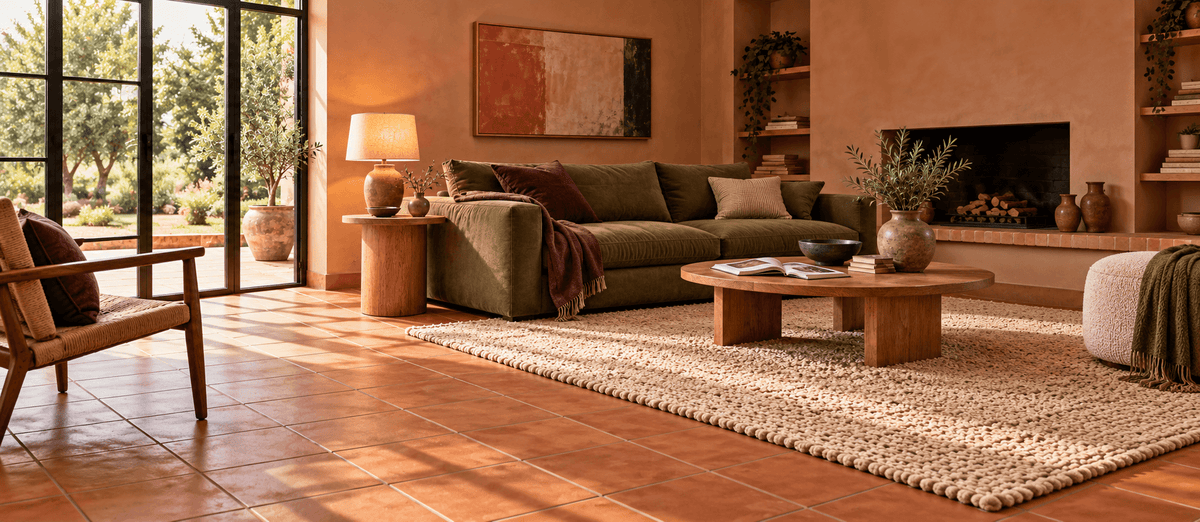
Find a floor that works with your room
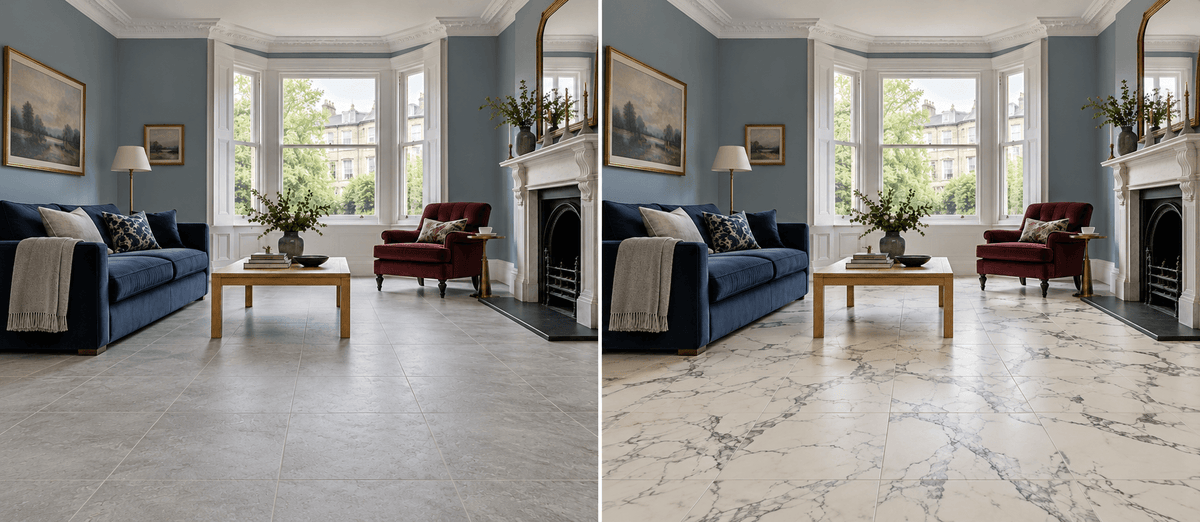
A floor can bring personality through bold veining, decorative patterns, or colour. It can also provide a quieter background for everything above it.
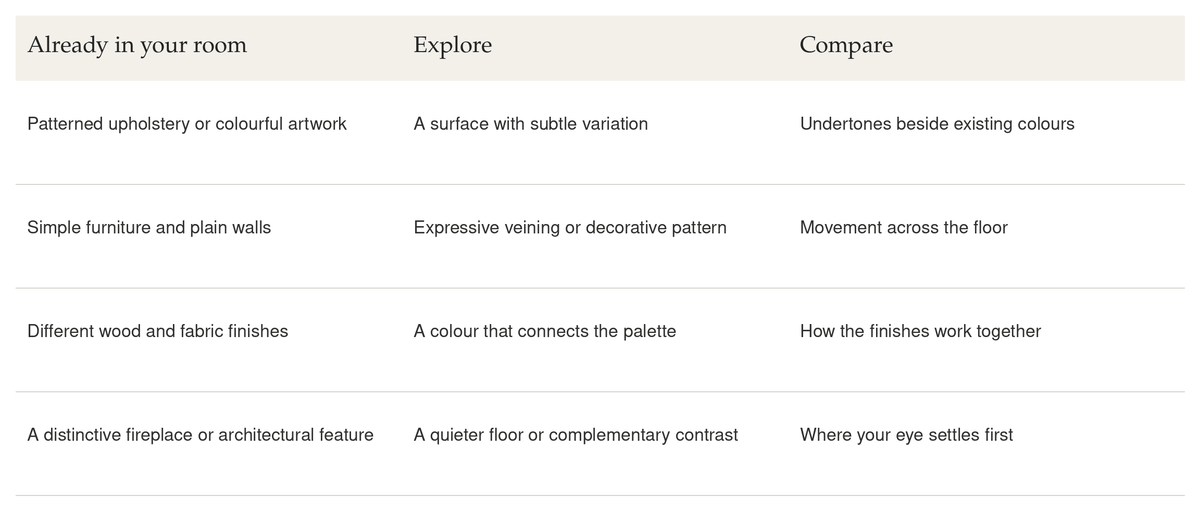
If you want the floor to bring more movement, explore Tropical White: its white marble effect and polished finish offer a different direction from a quieter stone surface.
When you enter the room, what would you like to notice first?
Connect the living space
In an open-plan home, the living room rarely exists on its own. From the sofa, you might see the dining table, kitchen cabinets and the garden beyond. Flooring becomes part of that wider view.
Carry the floor through
A continuous tile can give the different areas a shared foundation. Furniture, lighting and rugs can then define places to cook, eat and relax without introducing another flooring material at each boundary.
Give a room its own identity
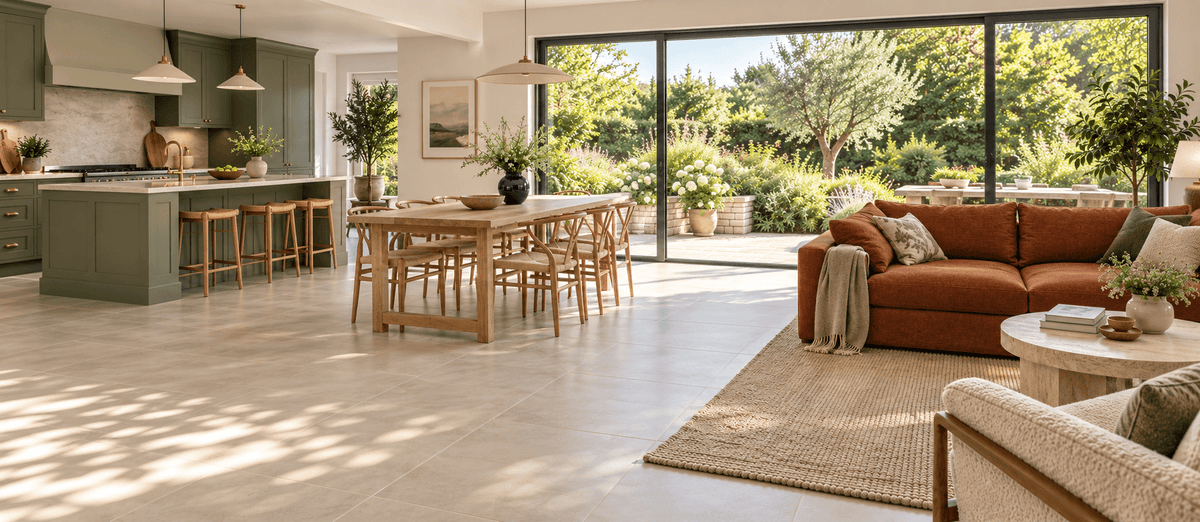
A change of flooring can also work beautifully, particularly where a doorway or architectural transition provides a clear stopping point. Think about the meeting of the materials as part of the design, including their colours and finished levels.
Before deciding, stand in a few familiar places: beside the kitchen island, at the dining table and where you usually sit. Those views can reveal connections that a floor plan misses.
Look beyond the tile itself
A sample helps you judge colour, texture and finish. To picture the whole floor, you also need to consider tile size, how the tiles are laid, and the grout colour.
Large formats create broader areas between joints. Smaller formats introduce more repetition, while plank shapes can bring direction through arrangement. Grout close to the tile's colour can soften the grid; a contrasting shade makes the individual shapes more apparent.
Speaking to House & Garden about pattern, Chloe Willis of Sibyl Colefax & John Fowler advises: “You have to decide the feeling you want and use the pattern with purpose.” For a tiled floor, that means looking beyond an individual sample to judge how the repeat or veining sits within the whole room.
Look at room photographs showing your shortlisted tile size and layout. Seeing the joints across a larger area will help you judge how much pattern the finished floor will have.
Let the walls join the composition
Sometimes a wall is the place for the material you love. A softly textured backdrop can bring detail to a seating area, while veining can give an alcove or media wall a stronger presence.
Picture a plain linen sofa against a softly ridged wall, lit from one side by a lamp. The interest comes from light and shadow, allowing the upholstery and floor to stay simple.
With a more expressive marble effect, the veining could become the feature instead. Compare it with the floor and nearby furniture, and look at images of a larger tiled area to judge the movement beyond a single sample.
For a wall feature, Wood Design Ecru Black brings a matt wood-slat effect that can add rhythm behind a sofa or across a media wall.
A fireplace surround is another possibility, although the tile, substrate, adhesive and installation must be suitable for the appliance and application.
Bring your shortlist home
Once you have a direction, test it against the room itself.
- Gather the finishes. Place tile samples beside fabric, paint and wood samples, or take them to the furniture you are keeping.
- Watch the light change. Compare them in daylight and with the lamps you normally use in the evening.
- Look closely, then step back. Notice the finish and variation, then judge the colours as a complete palette.
- Check the practical details. Confirm suitability, care requirements and any installation needs before ordering.
Finish this sentence: “This could work in my living room because…” Perhaps it picks up the colour of a favourite chair, connects the kitchen to the seating area or gives a simple room a little more character.
Explore ROCCIA's Living Area Tiles, Living Area Floor Tiles and Living Area Wall Tiles collections to build your shortlist, or bring your ideas to a showroom to compare materials.