
How to Create an Outdoor Dining Area Designed for Long Summer Evenings
There’s something distinctly different about outdoor dining in the summer. The pace slows, the light softens, and even a simple meal begins to feel more considered. But the most memorable outdoor dining spaces aren’t accidental, they’re carefully designed.
A well-planned outdoor dining area should feel like a natural extension of the house. Not just a patio with a table, but a true garden dining room, a space that invites you to dine outdoors, relax and spend long evenings with family and guests.
Whether you’re working with a terrace, balcony or larger garden, thoughtful design can transform any outdoor space into somewhere that feels both practical and beautifully inviting.
Choosing the Right Setting for Your Outdoor Dining Space
The success of an outdoor dining space often begins with its position.
Locating your dining area close to the kitchen makes everyday use easier, whether it’s a quick breakfast outside or a relaxed evening meal. Easy access between indoor and outdoor spaces encourages more frequent use and makes entertaining feel effortless.
Light also plays a key role. A spot that captures the evening sun creates a naturally warm and inviting atmosphere, while partial shade from a tree or pergola can make the space more comfortable during the day.
The best outdoor dining areas feel connected to their surroundings, not placed as an afterthought.
Grounding the Space: Patio, Decking and Surfaces
To create a true outdoor dining area, the flooring needs to feel intentional.
A defined patio or decking area helps establish structure and prevents the space from feeling temporary. Porcelain tiles or natural stone surfaces are ideal for outdoor dining because they are durable, weather-resistant and easy to maintain, particularly important in the UK where rain is frequent.
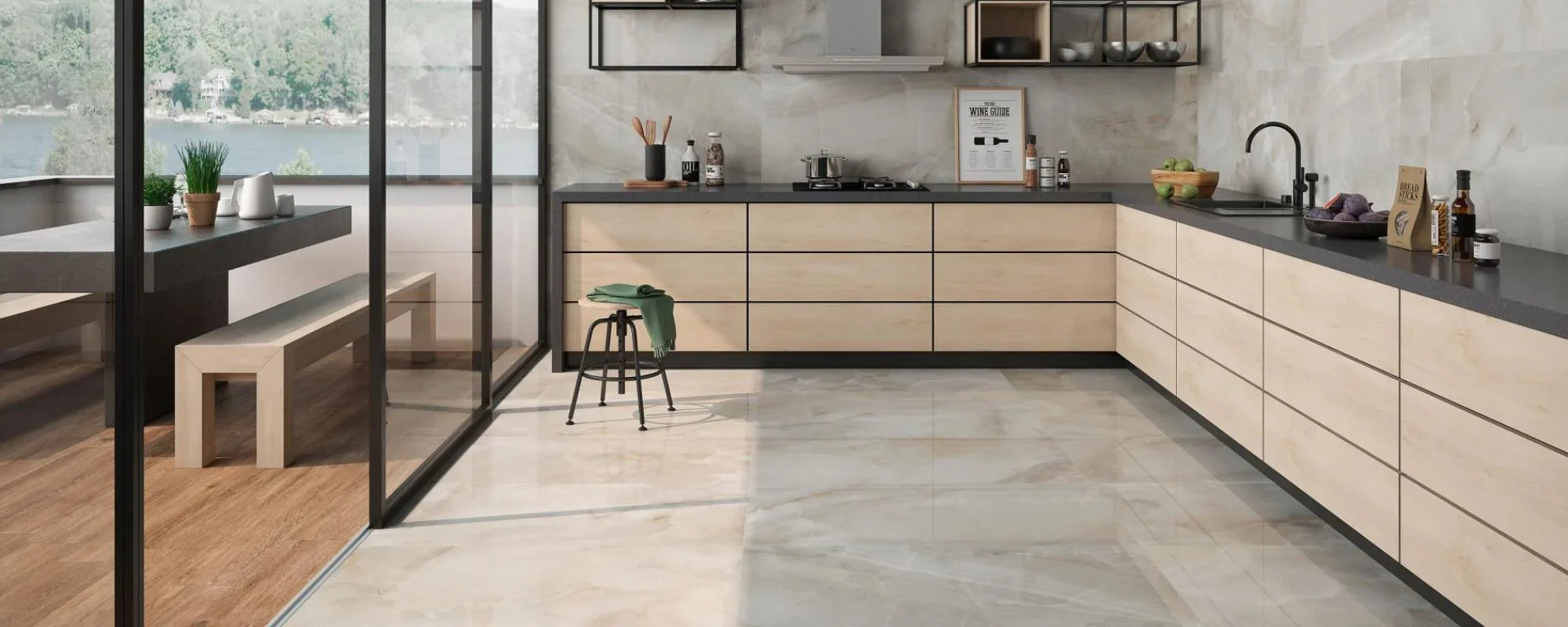
Large format tiles can make the space feel more seamless and contemporary, while textured finishes add grip and practicality. Warmer tones, soft beige, sand or subtle grey, help create a cosy and aesthetically pleasing foundation.
When the flooring is considered, the entire dining space feels more like a designed room rather than a loose arrangement of furniture.

Creating a Garden Dining Room Feel
An outdoor dining area works best when it feels like a room, even without walls.
This can be achieved through layout and subtle boundaries. A pergola overhead, surrounding plants, or built-in features can help frame the space and create a sense of enclosure.
Positioning furniture thoughtfully also defines the dining area. A central dining table, balanced with seating and soft landscaping, helps the space feel structured and inviting.
In larger gardens, this approach allows you to build a true garden dining room, somewhere that feels separate from the rest of the garden while still connected to it.
Choosing Outdoor Dining Furniture That Works
Furniture plays both a practical and visual role in your outdoor dining space.
A well-proportioned dining table should suit the size of the area, whether for everyday family use or larger gatherings. Extendable tables are particularly useful, allowing flexibility when hosting guests.
Outdoor dining furniture should be durable enough to handle changing weather conditions. Materials such as wood, metal or rattan dining sets offer different styles, from traditional warmth to more contemporary, sleek finishes.
Outdoor cushions soften the look and improve comfort, helping the space feel more relaxed and inviting. Choosing fabrics designed for outdoor use ensures they can withstand rain and regular use.
Designing for Comfort: Seating and Layout
Comfort is key if you want people to linger.
Chairs should feel supportive enough for long meals, and the layout should allow easy movement around the table. In smaller spaces or on a balcony, built-in seating or compact dining sets can help maximise space without overcrowding it.
In larger areas, mixing seating styles, such as benches with chairs, can create a more relaxed, less formal feel while still maintaining a cohesive design.

Lighting for Long Summer Evenings
As the evening sets in, lighting becomes one of the most important elements of the outdoor dining experience.
Soft, layered lighting creates a warm glow that makes the space feel cosy rather than overly bright. Wall lights, pendant lighting under a pergola, or subtle ground lighting can all enhance the atmosphere.
The aim is to create a setting where guests feel comfortable and relaxed, allowing the space to transition naturally from day to evening.
Adding Warmth and Atmosphere
To extend the use of your outdoor dining area beyond warm afternoons, consider adding features that bring warmth.
A fire pit or outdoor heater can help keep guests warm on cooler evenings, making the space usable year round. These features also add a focal point, enhancing both the visual and social experience of the space.
Natural elements such as plants, trees and soft textures further soften the environment, helping the space feel calm and connected to nature.
Keeping the Design Cohesive
A well-designed outdoor dining space should feel like part of the home’s overall style.
Using a consistent palette of materials, colours and textures ensures the space feels cohesive. Whether your home leans more traditional or contemporary, the outdoor dining area should reflect that same aesthetic.
Simple, neutral tones paired with natural materials often create the most timeless result, allowing the space to feel elegant without being overly styled.

Small Outdoor Dining Spaces Done Well
Even a compact outdoor space can become a lovely dining area with the right approach.
On a terrace or balcony, a smaller dining set or foldable table can create a practical yet stylish solution. Keeping the layout simple and uncluttered helps the space feel more open.
In smaller areas, every element matters, from the placement of the table to the choice of materials, so focusing on quality over quantity makes a noticeable difference.
Final Thoughts: Designing a Space to Dine, Relax and Gather
An outdoor dining space is more than just a place to eat, it’s a space designed for connection.
With the right layout, durable materials and thoughtful details, you can create an outdoor dining area that feels both practical and beautifully considered. Whether hosting guests, enjoying a quiet breakfast or gathering for a family meal, the space should feel easy, relaxed and inviting.
When designed well, outdoor dining becomes part of everyday life, not just something reserved for special occasions, but a natural extension of the home, made for long summer evenings.
Bringing Your Outdoor Dining Space to Life
Designing an outdoor dining space is as much about materials as it is layout. The right surfaces can completely transform how the space feels, from a simple patio into a considered extension of your home.
At Roccia, we offer an extensive collection of porcelain and natural stone tiles suited to outdoor living. Whether you’re creating a seamless transition from kitchen to terrace or building a dedicated garden dining area, our team can help you explore options that balance durability with design.
Visit one of our showrooms or shop online to discover materials, textures and finishes that bring your outdoor space together, and make it somewhere you’ll want to dine, relax and gather all summer long.